
Language learners often need more than a podcast that happens to be in their target language. They need listening practice that matches a specific goal, a useful topic, and a level they can follow without getting lost. A general show may be interesting, but it may not repeat the phrases needed for tomorrow’s conversation or explain the situation a learner is preparing for.
With PodcastorAI, an AI podcast generator for language learning can help turn a lesson note, short text, or original dialogue into a custom language learning podcast to replay. This guide shows how to set one learning goal, choose material you are allowed to use, review the generated script, and make the finished episode part of an active study routine.
What Is an AI Podcast Generator for Language Learning?
An AI podcast generator for language learning organizes a goal and source material into structured content designed for listening. In PodcastorAI, instead of starting with a blank recording, you can begin with a target language, approximate level, topic, or skill. You can also use a lesson note, short article, vocabulary list, or original dialogue as the source.
The result should be treated as a draft learning asset, not an automatic lesson plan. Generation can help shape an introduction, explanation, examples, and conversation, but a person still needs to check the meaning, level, vocabulary, tone, and pronunciation points before using the episode.
This distinction keeps the workflow practical. A language learning podcast generator helps create listenable material; the learner, teacher, or editor decides whether that material fits the learning goal and how it will be practiced.
How to Create a Language Learning Podcast With PodcastorAI
Once you have a clear learning goal and a source you are allowed to use, PodcastorAI gives you a structured path from material to a learning podcast. You can start with the language, level, topic, or skill you want to practice, review the generated script, and continue to audio or a captioned video format.
1. Set a Learning Goal
Define one action the learner should be able to attempt after listening. For the coffee-ordering example, the goal is not “learn Spanish.” It is “use a greeting, order a drink politely, and confirm the price in a short A1-A2 exchange.” A narrow goal helps you judge which vocabulary belongs in the script.
| CEFR level | Example learning goal | Suitable listening scenario |
|---|---|---|
| A1 | Recognize basic phrases and complete one simple exchange. | Greeting someone, ordering one item, or asking the price |
| A2 | Follow common expressions and respond during a routine task. | Checking into a hotel, asking for directions, or making an appointment |
| B1 | Identify the main points and retell important details in clear speech. | A travel story, workplace update, or familiar news report |
| B2 | Compare viewpoints and respond with relevant explanations. | An interview, team discussion, or debate on a familiar issue |
| C1 | Follow extended speech and identify attitude, purpose, and implied meaning. | A university lecture, professional presentation, or detailed interview |
| C2 | Interpret nuance, register, humor, and subtle differences in complex speech. | An expert debate, literary discussion, or fast multi-speaker conversation |
2. Add Source Material
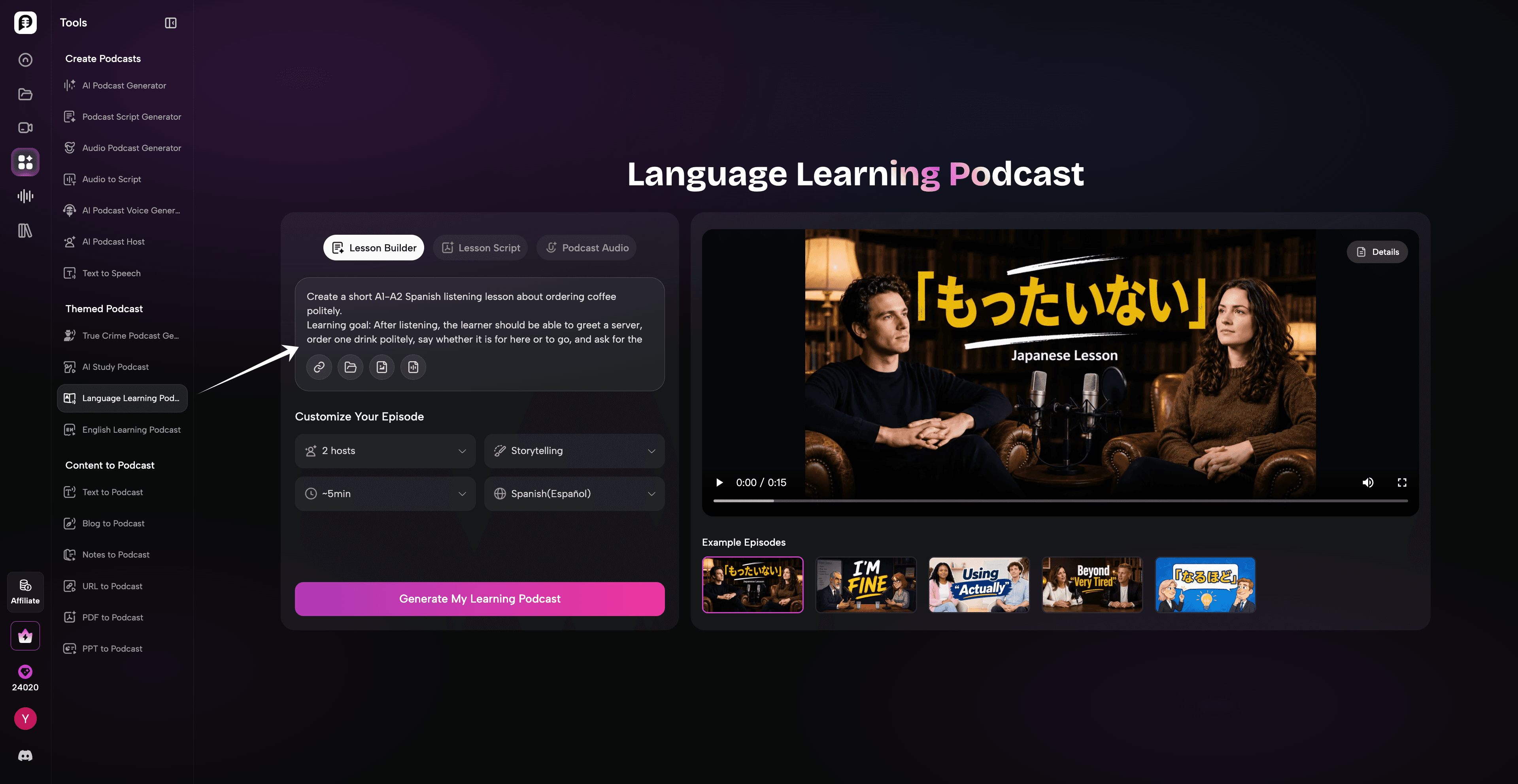
In PodcastorAI, enter your original scenario or add approved material through the available link, file, image, audio, article, or text inputs. Include enough context for the speakers to explain the situation without inventing important facts. Publicly available material is not automatically free to republish, so confirm permission before turning a third-party source into a public episode.
3. Generate and Review the Script
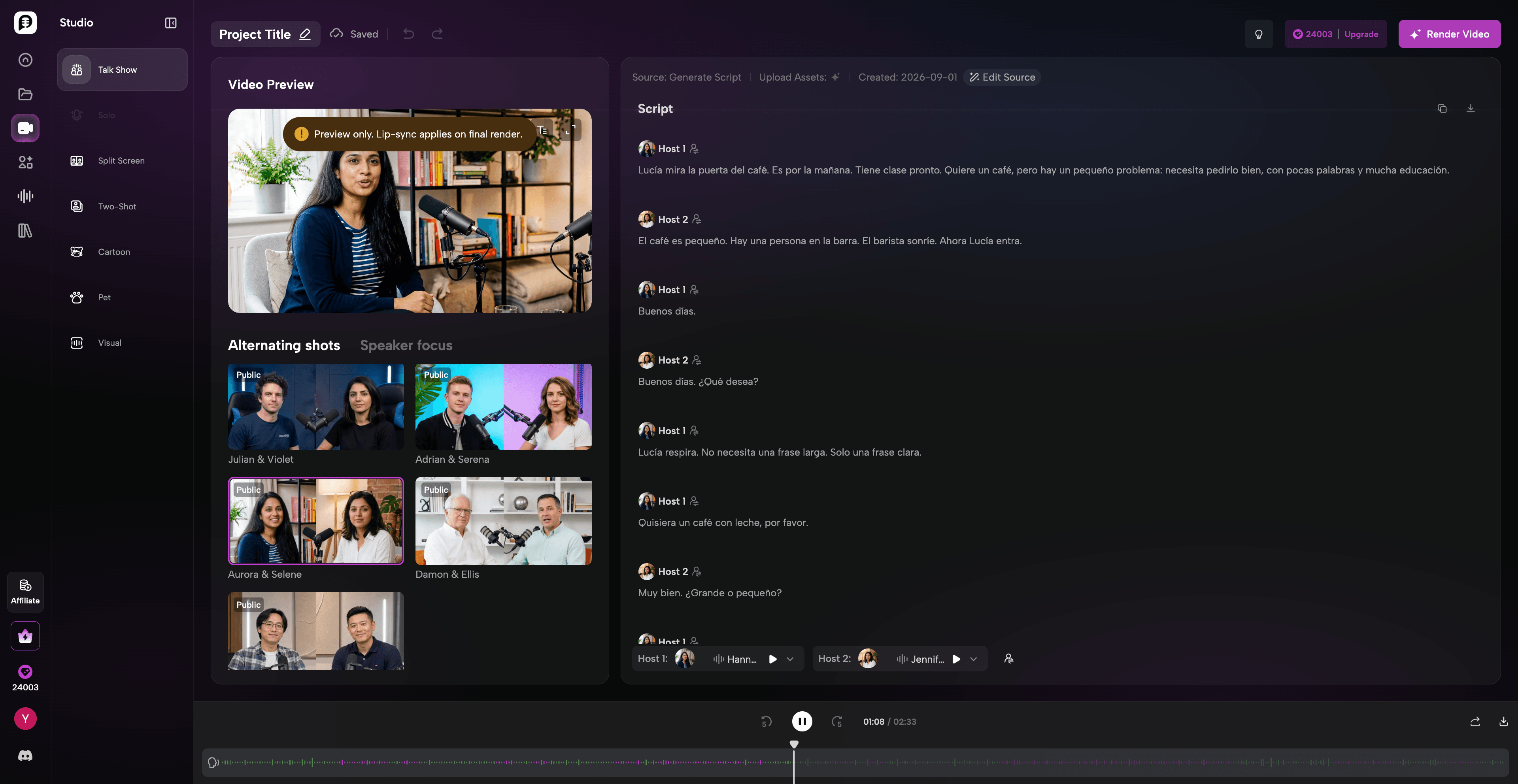
Generate the structured script, then read every line before creating audio. Check that the dialogue follows the learning goal, the vocabulary load fits the level, and each speaker has a clear role. Replace awkward phrasing, correct meaning, remove unnecessary detail, and mark words that may need a pronunciation check. Human review is the quality-control step that connects the source to the final lesson.
4. Create Audio or a Captioned Video
Choose a voice that suits the learner and preview the conversation. You can continue with downloadable audio for screen-free listening or render an AI-host or faceless video with subtitles and waveform support for visual review. Use captions as a checking aid, especially for spelling and speaker changes, rather than reading them through every first listen.
5. Replay With an Action
Give the learner something specific to do after each pass. Ask them to pause after the order, repeat the line, answer as the server, or write down three useful expressions. The replay task is a learning recommendation, not a product guarantee, and it can be adjusted to the learner’s needs.
Why Custom Listening Practice Can Be More Useful
Custom listening practice starts with the learner’s problem. Someone preparing to order coffee in Spanish needs different vocabulary from someone discussing a research paper in English. The right podcast for listening practice should match the situation closely enough that the listener can notice useful language and try it afterward.
A focused episode can also be easier to replay. A learner might first listen for the main idea, then return with a script or captions to check unfamiliar phrases. Because the topic and source are already familiar, the second listen can focus on wording, speaker changes, and details that were missed the first time.
Customization does not make audio a complete learning solution. An AI learning podcast can support listening and recall, but it should sit beside speaking practice, reading, instruction, and feedback. Its value comes from giving the learner a repeatable task, not from playing in the background without a goal.

Choose a Source You Can Use and Learn From
Start with material that is both useful and appropriate to reuse. Good options include your own notes, a self-written dialogue, an approved course outline, or material covered by a license or permission that fits the intended use. If you plan to publish the episode, review the rights for quotations, images, audio, and other third-party content before adding them.
Keep the source narrow enough for one listening objective. A full textbook chapter may contain too many ideas, while a short scenario can give the episode a clear beginning and outcome.
For example, use an original scenario called Ordering Coffee Politely in Spanish (A1-A2). The goal could be to greet the server, order one drink, use a polite expression, and confirm the price. Write the situation in your own words, then keep that approved source beside the generated script so you can compare the two during review.
Use the Podcast as Practice, Not Background Noise
Use a four-pass listening cycle so the episode leads to action. Keep each pass focused on one job:
| Pass | Purpose | What to do | Support |
|---|---|---|---|
| 1 | Understand | Listen without stopping; identify the speakers, situation, and outcome. | None |
| 2 | Check | Open the approved script or captions; confirm unfamiliar words and speaker changes. | Full |
| 3 | Produce | Pause, repeat useful lines, and use three expressions in new sentences. | Script as reference |
| 4 | Recall | Listen again and reproduce or explain the key language. | Reduced |
If pronunciation matters for formal study, ask a teacher or proficient speaker for feedback. The goal is not to remove support immediately, but to use less support as comprehension and recall improve.
This structure keeps the episode reusable because every listen has a purpose: understand, check, produce, and recall.
Conclusion
Start with one learning goal, one short source, and one episode you can replay. With PodcastorAI, you can turn your study material into a structured language learning podcast and build a listening routine around it.
Keep the goal specific, compare the generated script with your approved source, and give each replay an action. An AI podcast generator for language learning can support a wider study routine, but it does not replace speaking, reading, instruction, or feedback. Use captions when needed, then listen again with less help.