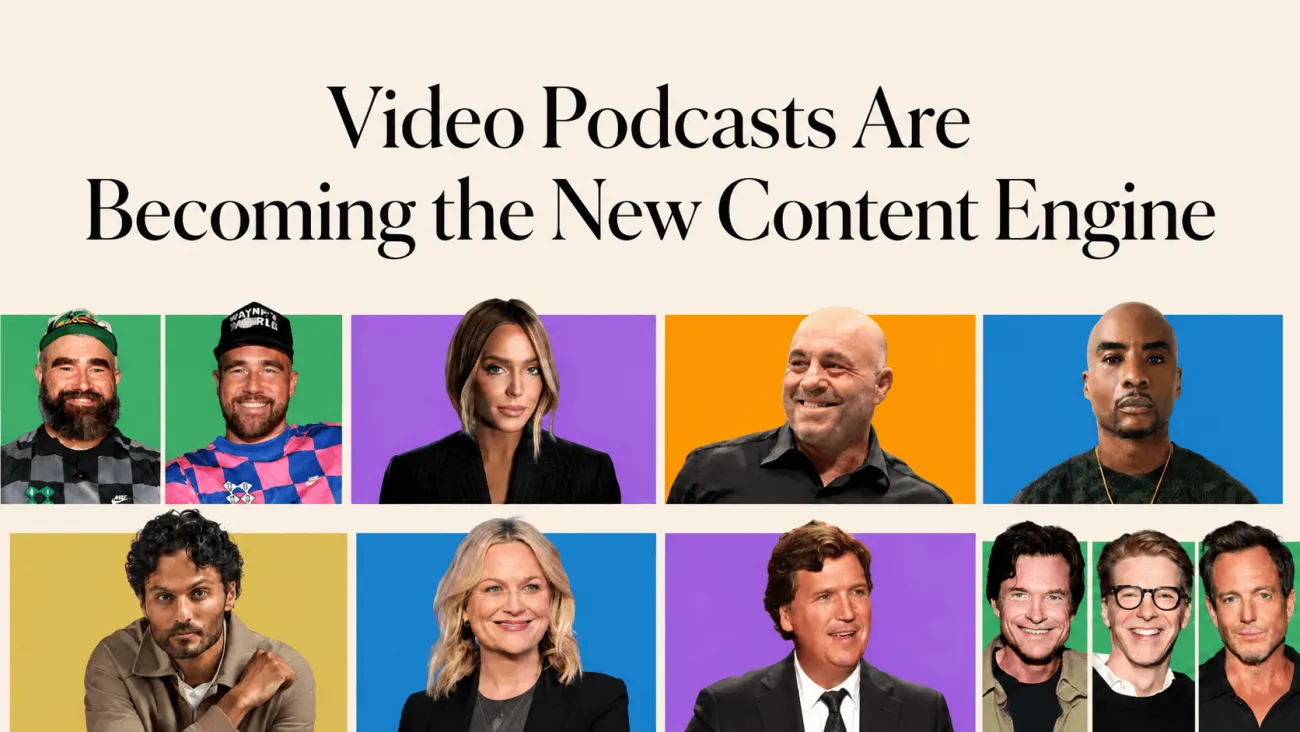

When Forbes released its annual ranking of the highest-paid podcast creators of 2026, most headlines focused on the same thing: the money.
Joe Rogan reportedly earned $82 million from podcasting. Jay Shetty secured a new distribution deal worth an estimated $100 million over three years. Steven Bartlett continued expanding The Diary of a CEO into a multi-business media brand, while platforms like Spotify, Netflix, Amazon, and SiriusXM competed aggressively for exclusive podcast partnerships.
Those numbers are impressive. But the ranking tells a much bigger story than who made the most money this year.
Look closely, and a clear pattern begins to emerge.
The creators at the top aren’t simply producing podcasts—they’re building media businesses, owning valuable intellectual property, and reaching audiences through video-first content across multiple platforms.
At the same time, streaming platforms are no longer treating podcasts as a niche audio format. They’re investing in them as premium entertainment, competing for exclusive rights in much the same way they once competed for blockbuster TV series.
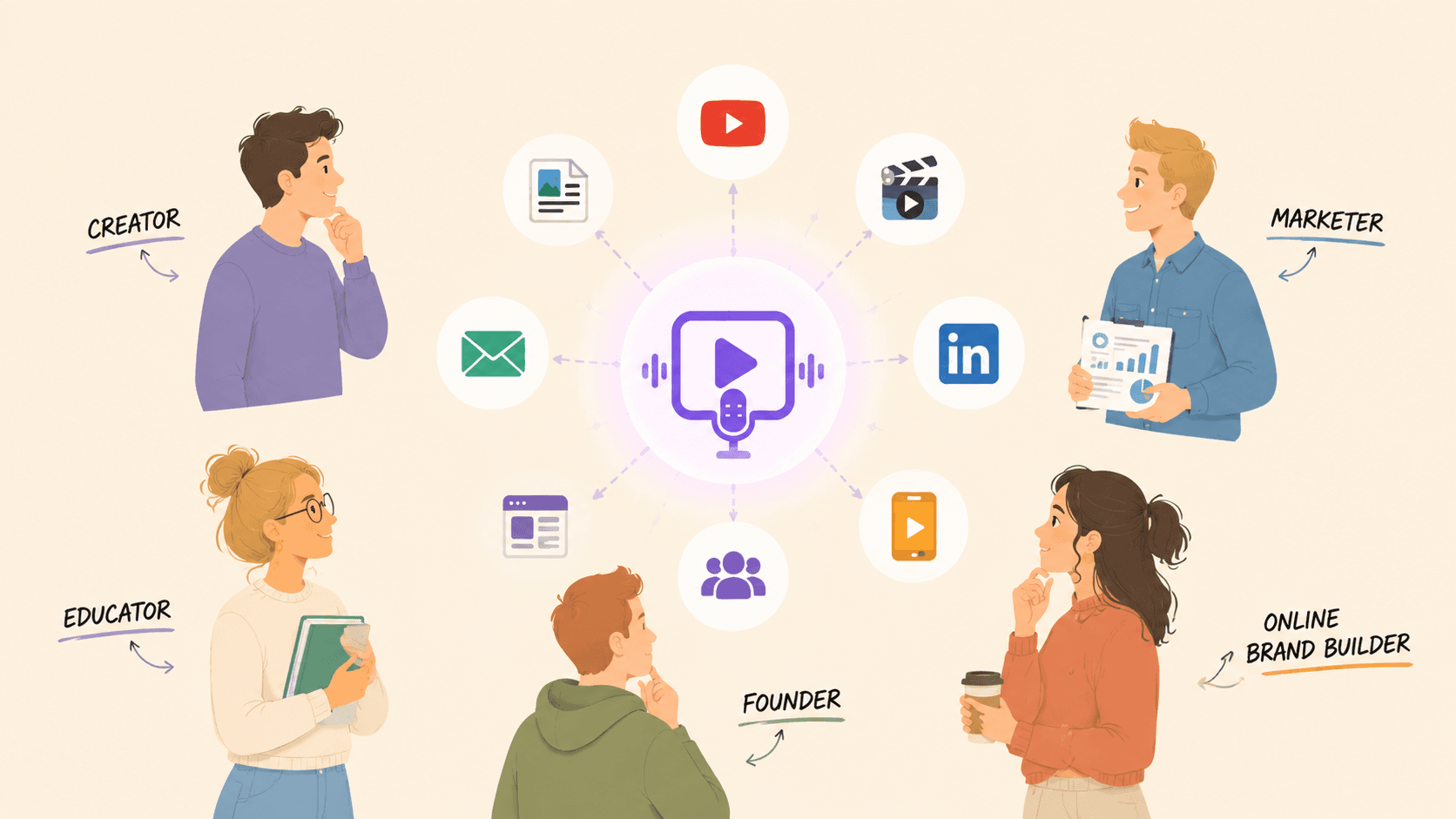
For creators, educators, founders, marketers, and anyone building an online brand, this shift matters.
Because the biggest takeaway from Forbes’ latest ranking isn’t how much the world’s top podcasters earn. It’s where content creation is heading next.
Three Things Every Creator Should Learn from This Year’s Forbes Ranking
Before diving into the list itself, here are the three biggest trends it reveals.
Video podcasts have become mainstream.
Podcasts are no longer confined to Spotify or Apple Podcasts. Today’s biggest shows are designed for YouTube, Netflix, social media, and streaming platforms just as much as traditional audio apps.
Platforms are investing in creators—not just content.
The biggest deals aren’t about buying podcast episodes. They’re about partnering with creators who own loyal communities, trusted brands, and valuable intellectual property.
AI is lowering the barrier to entry.
Professional podcast production once required studios, production teams, and expensive equipment. Today, AI is making high-quality video podcast creation accessible to individual creators and small teams.
These trends explain why podcasting has become one of the fastest-growing segments of the creator economy—and why video podcasts are quickly becoming an essential format rather than an optional one.
The Highest-Paid Podcast Creators of 2026
According to Forbes, these creators generated the highest estimated podcast-related income over the past year.
| Rank | Creator | Podcast | Estimated Earnings |
|---|---|---|---|
| 1 | Joe Rogan | The Joe Rogan Experience | $82M |
| 2 | John Coogan & Jordi Hays | TBPN | $70M |
| 3 | Steven Bartlett | The Diary of a CEO | $45M |
| 4 | Ashley Flowers | Crime Junkie | $42M |
| 5 | SmartLess | SmartLess | $37M |
| 6 | Mel Robbins | The Mel Robbins Podcast | $35M |
| 7 | Jason & Travis Kelce | New Heights | $35M |
| 8 | Alex Cooper | Call Her Daddy | $32M |
| 9 | Pod Save America | Pod Save America | $28M |
| 10 | Charlamagne Tha God | The Breakfast Club | $27M |
Source: Forbes, “The Highest-Paid Podcasters of 2026.”
Interestingly, the ranking spans a wide range of industries: Business, Technology, Sports, Health, Comedy, Politics, True crime,Lifestyle.
Different audiences, different formats, and different monetization strategies—but remarkably similar business models. Almost every creator on the list has expanded beyond podcasting itself.
They’re building brands instead of shows. And that’s exactly where the industry is changing.
Video Podcasts Have Officially Entered the Mainstream
Not long ago, podcasting was almost entirely associated with audio.
Creators published episodes to Spotify or Apple Podcasts, listeners pressed play during their commute, and video was often treated as an optional extra.
That model is quickly disappearing. Today, the world’s biggest podcasts are built with video in mind from the very beginning.
One recording session becomes a full-length YouTube episode, dozens of short-form clips, Instagram Reels, TikTok videos, LinkedIn content, newsletters, and live community discussions. Instead of serving a single platform, every episode becomes the starting point for an entire content ecosystem.
The strongest signal came from Netflix. Earlier this year, Netflix Co-CEO Ted Sarandos described video podcasts as "the modern version of the talk show,**"**explaining that while traditional television might support only a handful of flagship talk shows, streaming platforms can successfully host hundreds of them simultaneously.
That statement reflects something much bigger than a platform strategy.
It reflects a shift in how audiences consume content. People are no longer choosing between podcasts and video. Increasingly, they expect both.
Video Podcasts Are Becoming the New Content Engine
For years, podcasts were treated as just another content format.
Creators wrote blog posts, filmed YouTube videos, published newsletters, posted on LinkedIn, and occasionally recorded a podcast alongside everything else.
Today, that workflow is beginning to reverse. The most successful creators no longer build content around multiple disconnected formats.
Instead, they start with one long-form conversation—and let everything else grow from it.
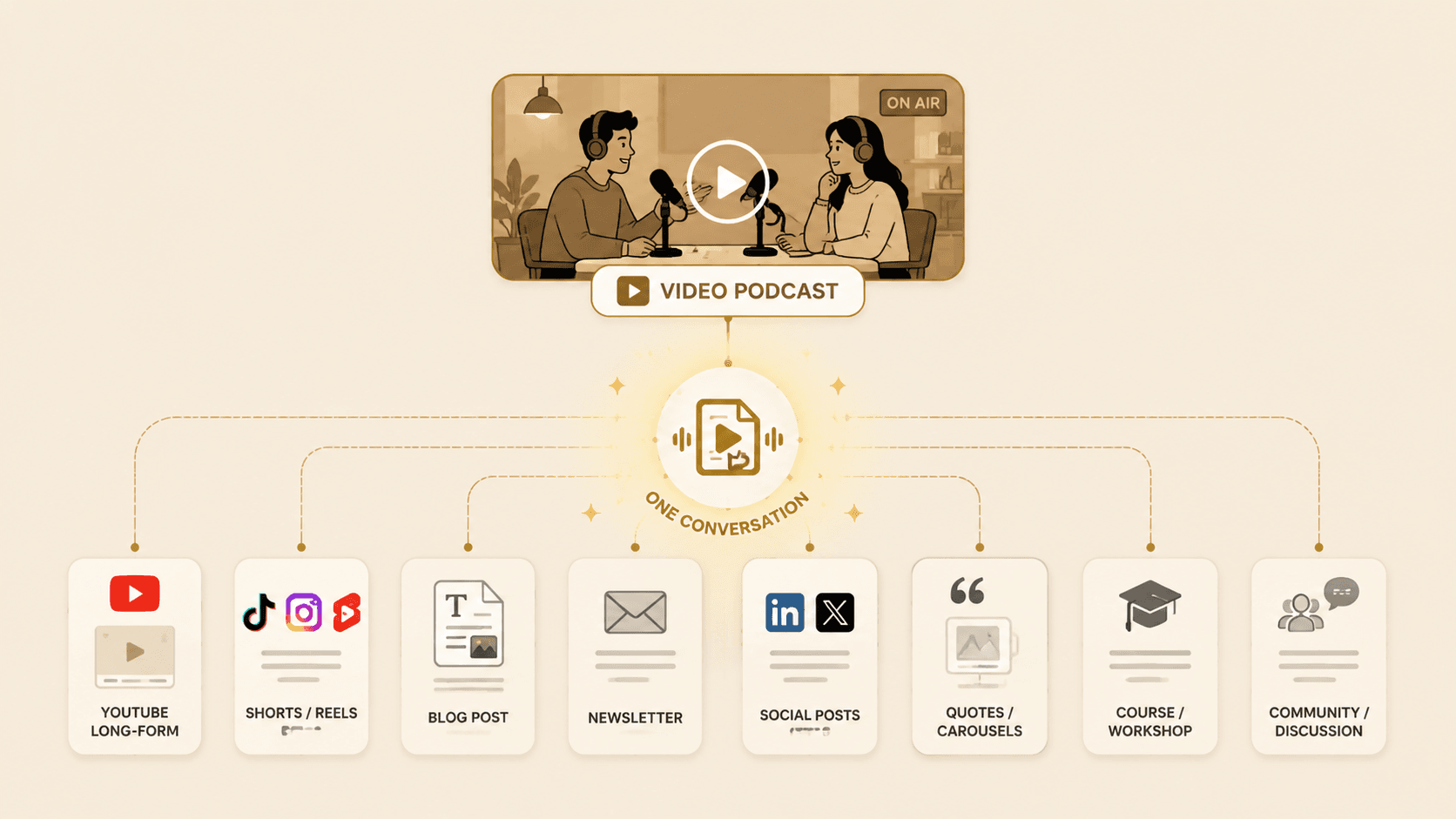
A single video podcast can become a YouTube episode, dozens of short-form clips, a blog article, a newsletter, social media posts, community discussions, and even educational content.
The podcast is no longer just another item on the content calendar. It’s becoming the engine behind the entire content strategy.
AI Is Making This Strategy Available to Everyone
For years, this approach was only realistic for creators with professional production teams.
-
Recording high-quality video
-
Editing multiple formats
-
Writing show notes
-
Creating subtitles
-
Repurposing content for every platform
-
Publishing consistently
It required time, money, and people. Today, AI is dramatically changing that equation.
Tasks that once required an entire production workflow can now be completed in a fraction of the time.
Instead of spending hours editing, creators can focus on what actually differentiates them: their ideas, expertise, and conversations.
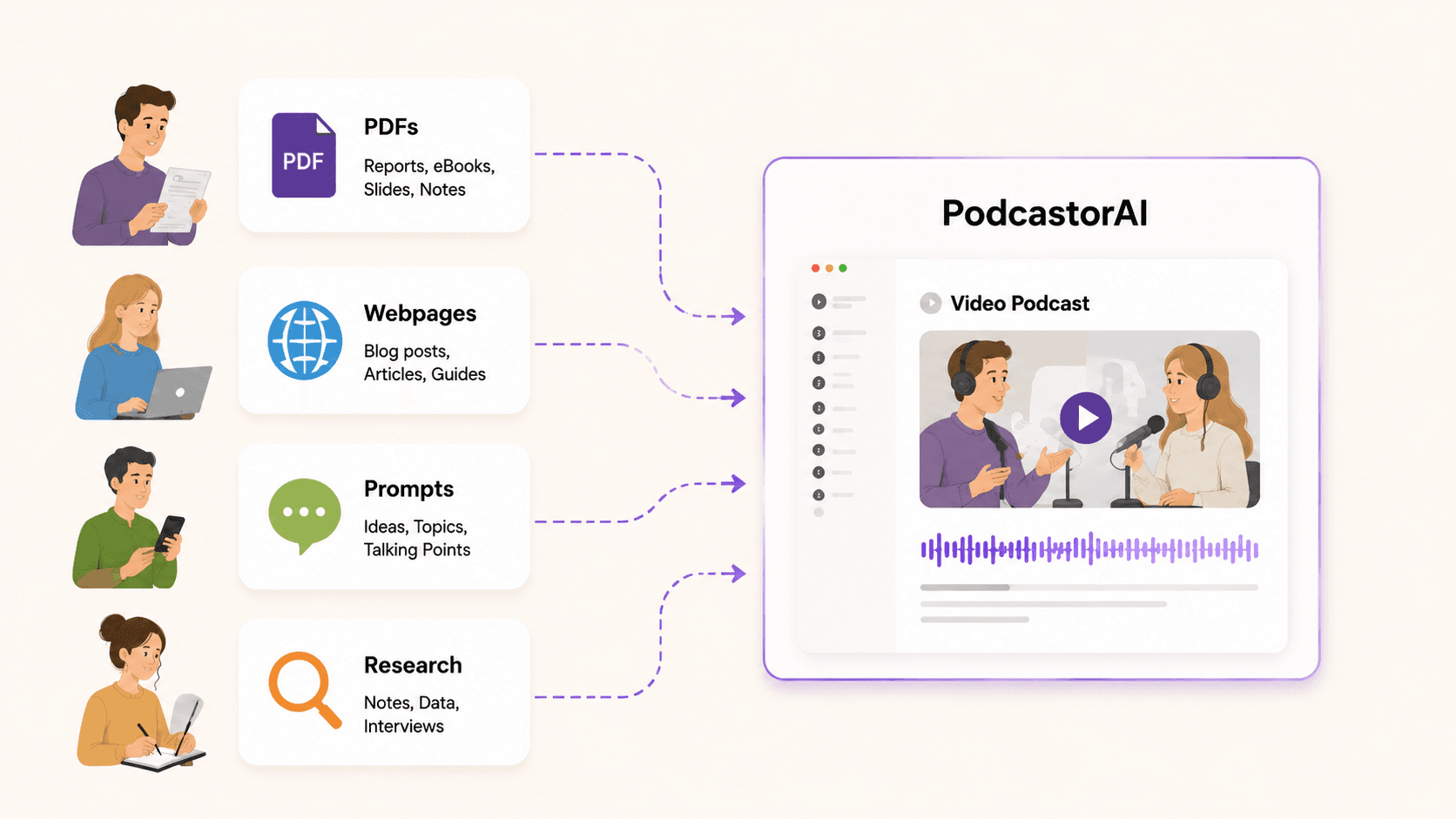
That’s where tools like PodcastorAI fit into the picture.
Rather than replacing creators, AI removes the production bottlenecks that prevent great ideas from reaching an audience.
A document, presentation, webpage, research paper, or simple prompt can become a complete video podcast—with an AI host, natural-sounding voices, polished visuals, and content ready to publish across multiple platforms.
More importantly, it transforms a single idea into a reusable content engine.
And that’s becoming one of the biggest competitive advantages creators can have.
Final Thoughts
The Forbes ranking isn’t really about who earned the most money in podcasting.
It’s about where the creator economy is heading.
The most successful creators aren’t winning because they happen to publish podcasts.
They’re winning because they’ve built systems that turn one meaningful conversation into an entire ecosystem of content, relationships, and business opportunities.
That’s why video podcasts matter. Not because they’re replacing blogs, YouTube videos, newsletters, or social media.
But because they’re increasingly becoming the source that powers them all.