
TLDR
Choose a clear angle, find a well-documented case, verify the important details, write a structured script, and produce an episode you can publish consistently. Once your source folder is ready, PodcastorAI can help turn it into an editable script and an audio or video draft. This guide shows you where to find cases, how to research them, how to write the conversation, and what to check before publishing.
Start with a clear format and niche
True crime is a broad category. A new show needs a narrower promise so listeners know what they will get from the next episode.
You could focus on:
-
unsolved disappearances and missing-person cases;
-
historical cases and how investigations changed over time;
-
wrongful convictions and disputed evidence;
-
financial crimes, scams, and how victims were targeted;
-
cases from one region or historical period; or
-
court records and the criminal justice system.
Write your show idea in one sentence:
This podcast explains [type of case] for listeners who want [specific value].
For example:
This podcast examines overlooked financial crimes and explains how the schemes worked, how investigators found them, and what victims can learn.
That sentence will guide your show name, episode choices, artwork, guest decisions, and promotion. It also helps you avoid publishing unrelated cases simply because their headlines are dramatic.
The Crime Junkie podcast is a useful reference for the broad format many listeners already understand: a case-led story, a clear timeline, and conversational explanation. Use that as a starting point for your own structure. Your show still needs its own name, voice, editorial point of view, and visual identity.
Where to find true crime cases
Use different sources for discovery and verification. A place that helps you find an interesting case may not be reliable enough to support a factual claim in your episode.
Use Reddit to find audience questions
Communities such as r/TrueCrime and r/UnresolvedMysteries can show you which cases generate questions and discussion.
Read the comments for:
-
details that people keep asking about;
-
timelines that do not seem to match;
-
links to court records or local reporting;
-
theories that need clearer evidence; and
-
cases that create interest without relying only on graphic details.
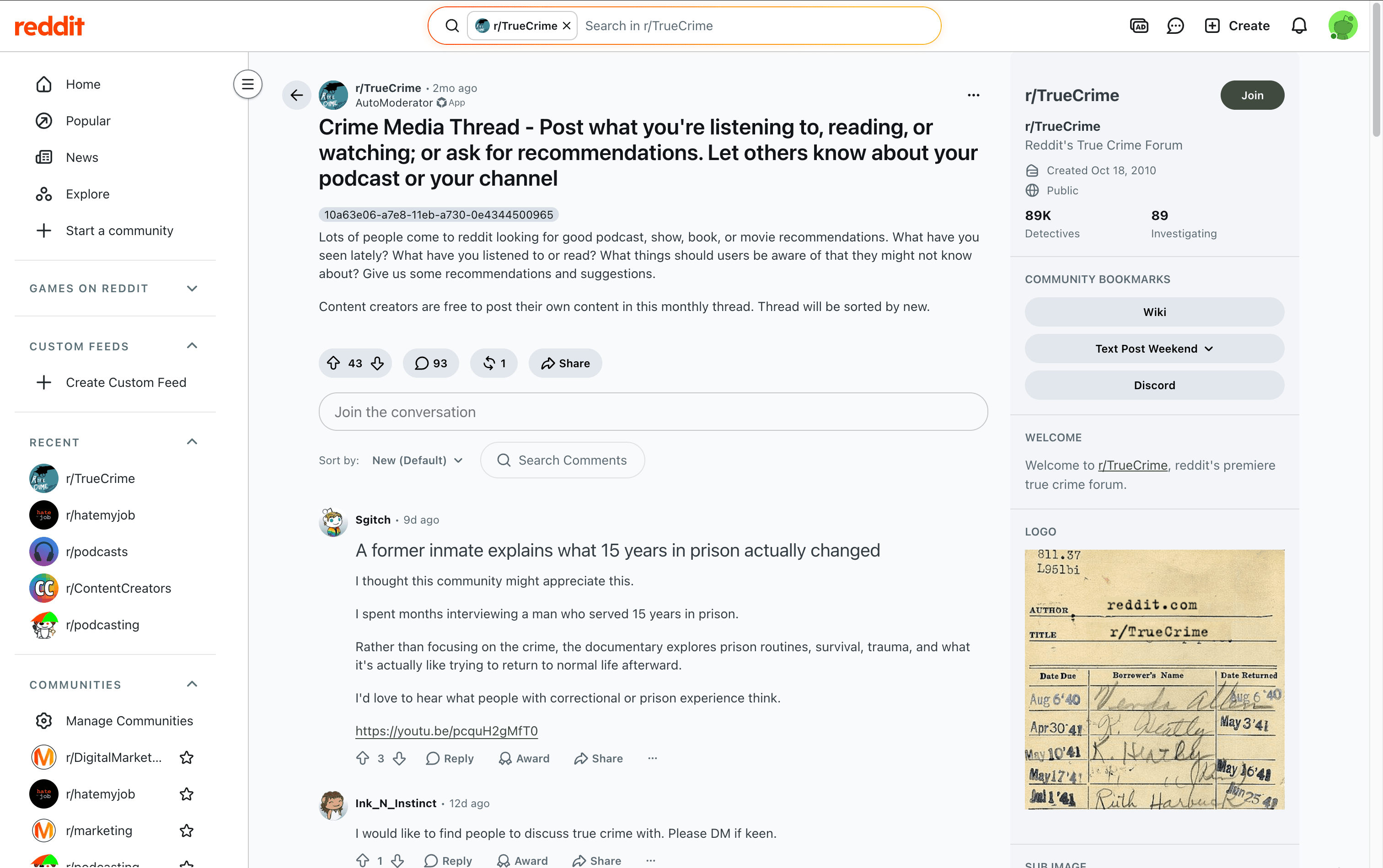
Reddit is a lead generator, not a reporting source. If a post helps you discover a case, open the original links and verify the claim somewhere else. Save the original publication date and note whether the information is confirmed, disputed, or only speculation.
Use case directories to build a shortlist
The Charley Project collects information about missing people in the United States. NamUs is a U.S. Department of Justice-supported system for missing, unidentified, and unclaimed persons. The FBI wanted database is a useful place to find official information about people wanted by federal agencies.
You can also use Wikipedia’s list of unsolved deaths to find names and dates that may lead to better sources.
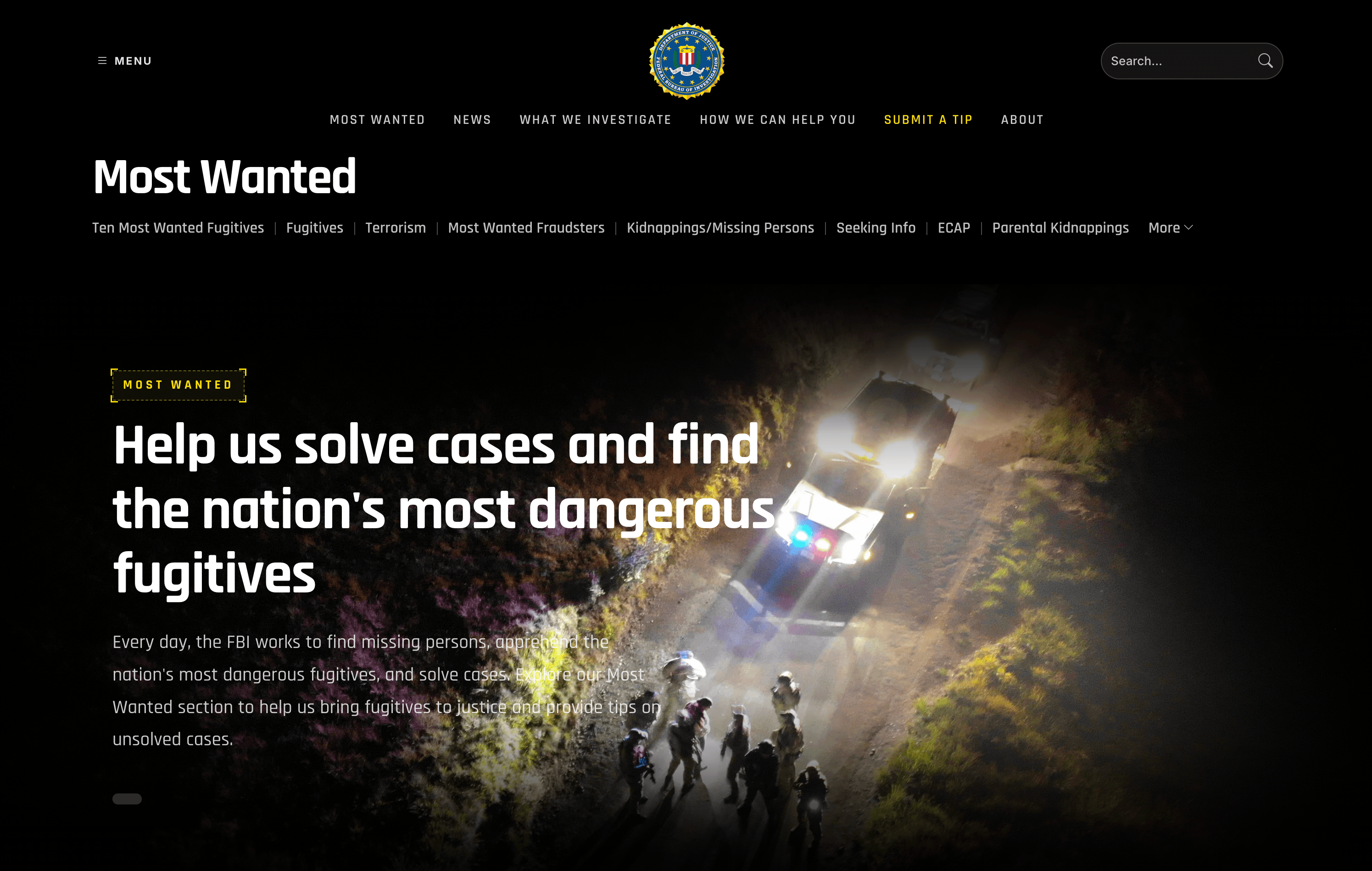
Treat every directory as a starting point. Check whether the case has been solved, whether the record has been updated, and whether the family or investigating agency has asked for a particular kind of public attention.
Search local news archives
National summaries often leave out the details that make a case understandable. Search by location and record type instead of only searching a famous case name.
Useful queries include:
-
cold case [county]
-
missing person [city]
-
court filing [jurisdiction]
-
police statement [case name]
-
trial update [defendant name]
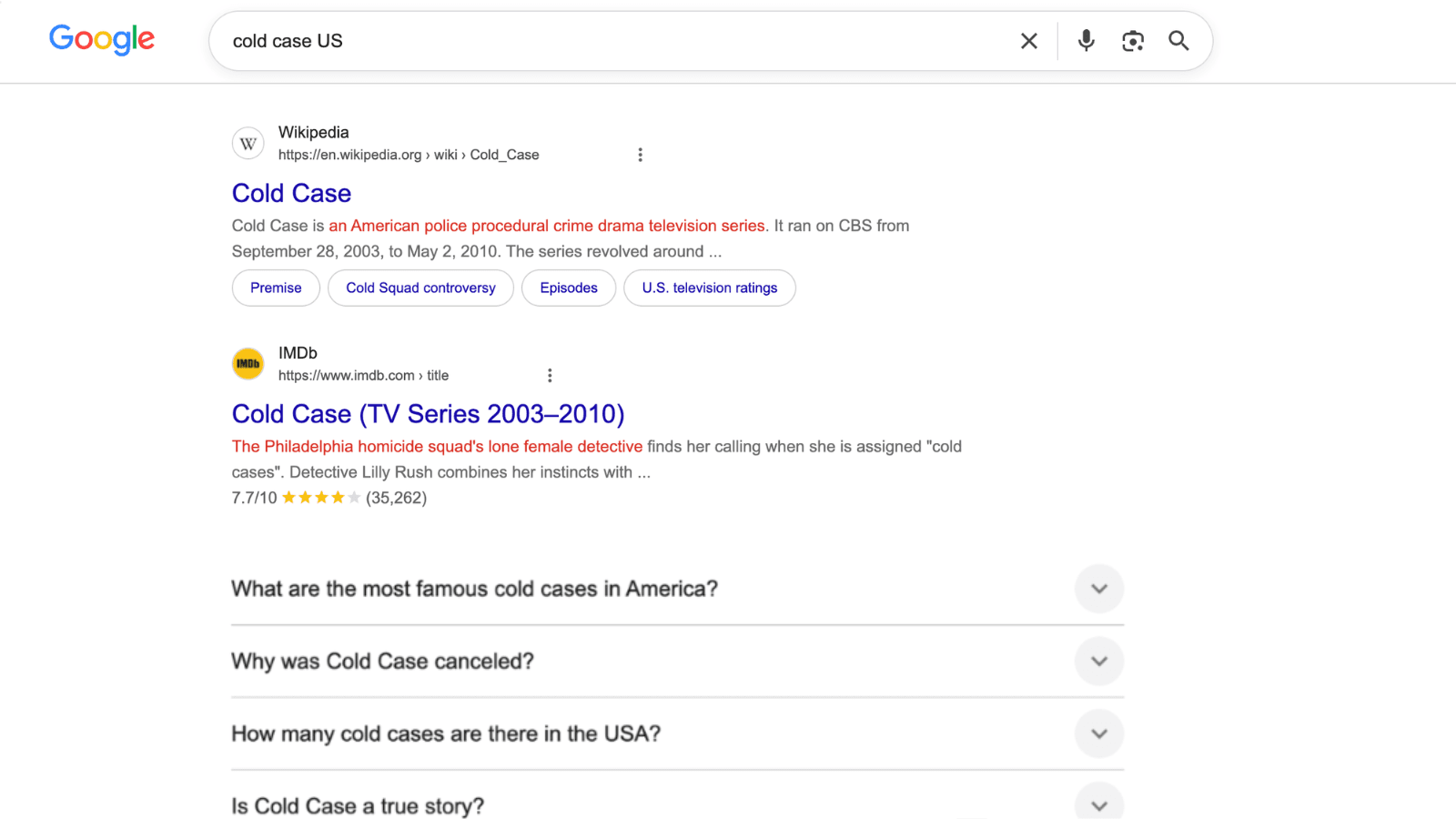
Local reporting can give you dates, interviews, agency statements, and updates that are missing from national listicles. It still needs cross-checking. Compare it with a police release, court docket, indictment, court opinion, or later correction before treating it as final.
Use court records for legal claims
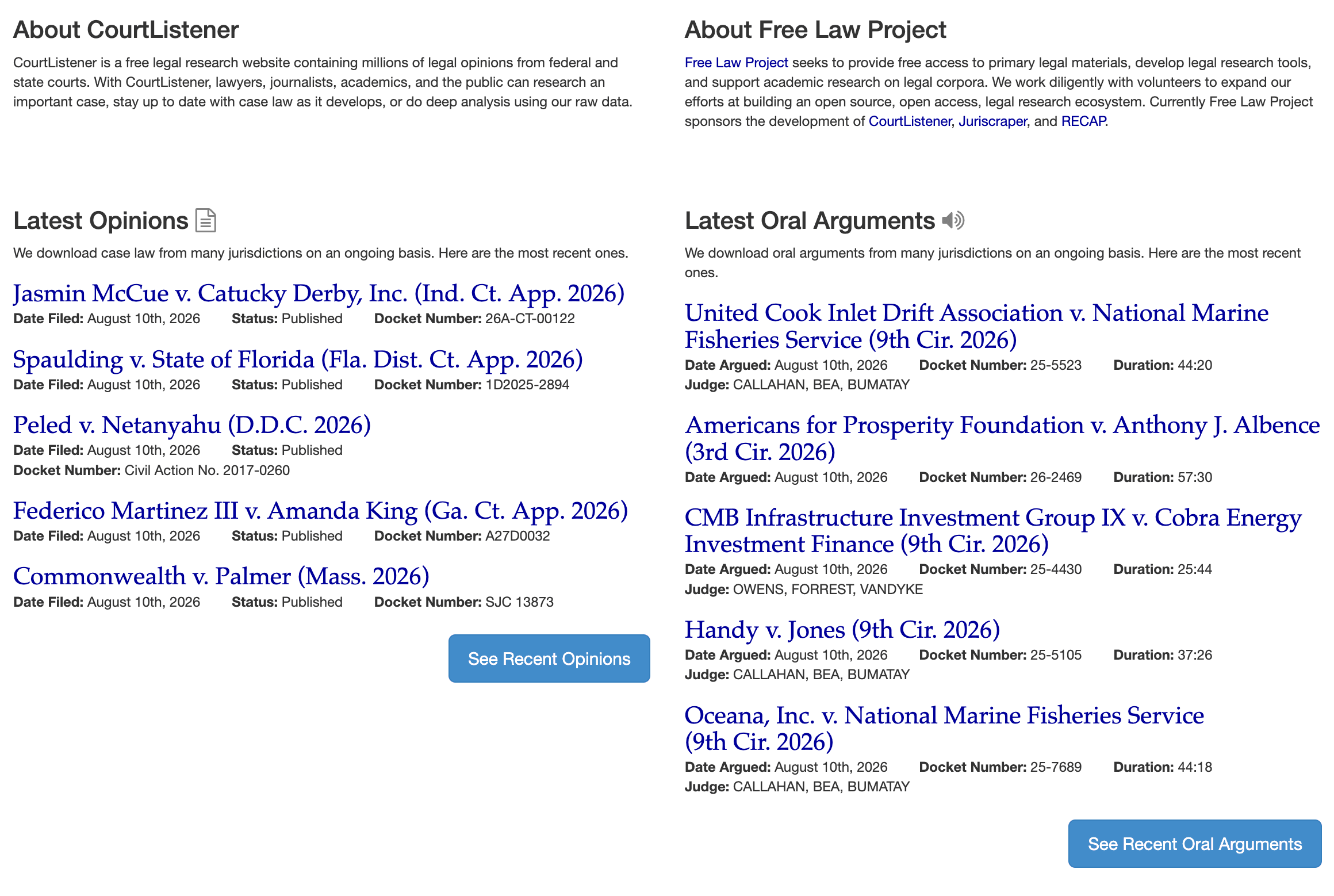
For allegations, charges, motions, and decisions, look for the original filing instead of relying only on an article that summarizes it. CourtListener can help you search public U.S. court documents and opinions. Depending on the jurisdiction, you may also need the court’s own records portal.
Use the wording that matches the source:
| What the source says | What your script can say | Avoid saying without stronger proof |
|---|---|---|
| A complaint alleges conduct | “The complaint alleges…” | “The person did…” |
| A judge ruled on a motion | “The court ruled that…” | “The court proved…” |
| A witness gave testimony | “The witness testified…” | “The testimony established…” |
| A report describes a theory | “One reported theory is…” | “The motive was…” |
This distinction matters in every true crime podcast, including one inspired by the Crime Junkie podcast format. A conversational tone should make the reporting easier to follow, not make uncertain claims sound certain.
Build a source stack before you write
A source stack is a small set of materials that supports one episode. For a straightforward case, start with one primary source and two independent secondary sources.
| Source type | What it is useful for | Example |
|---|---|---|
| Court record | Charges, rulings, testimony, legal status | Complaint, indictment, opinion, docket |
| Agency record | Official timeline and investigative statements | Police release or federal notice |
| Local reporting | Interviews, context, updates, corrections | Named local news report |
| Original interview | Direct testimony and specific quotes | Recorded interview or transcript |
| Case database | Names, dates, case leads | Charley Project or NamUs entry |
| Community discussion | Audience questions and discovery leads | Reddit thread with linked sources |
Create a table while you research:
| Claim | Source | Status | Exact wording to use |
|---|---|---|---|
| Date or event | Primary record or reliable report | Confirmed | State it directly |
| Allegation | Filing or attributed report | Needs attribution | “Prosecutors alleged…” |
| Theory | Named source or analysis | Unconfirmed | Label it as a theory |
| Missing information | Documented gap | Unknown | Explain what is not known |
| Update | New official or reputable report | Check date | Add the update date |
This table prevents a common mistake: remembering a theory as if it were a fact after reading the same claim in several posts. Five websites repeating one unsourced sentence do not make it independently verified.
Choose a case worth covering
Before you spend a week researching a case, test it against six questions.
| Test | Good sign | Warning sign |
|---|---|---|
| Documentation | One primary source and two independent sources | The story depends on one anonymous post |
| Narrative question | You can explain the episode angle in one sentence | The angle is only “this is shocking” |
| Timeline | Dates and events can be reconciled | Sources contradict each other without context |
| Original value | You can add documents, context, or a useful comparison | The episode would repeat a viral summary |
| Human impact | You can cover people with care | The hook depends on private or graphic details |
| Publication risk | You can identify legal, privacy, and rights issues | A living person is accused without review |
Start a True Crime Podcast with PodcstorAI
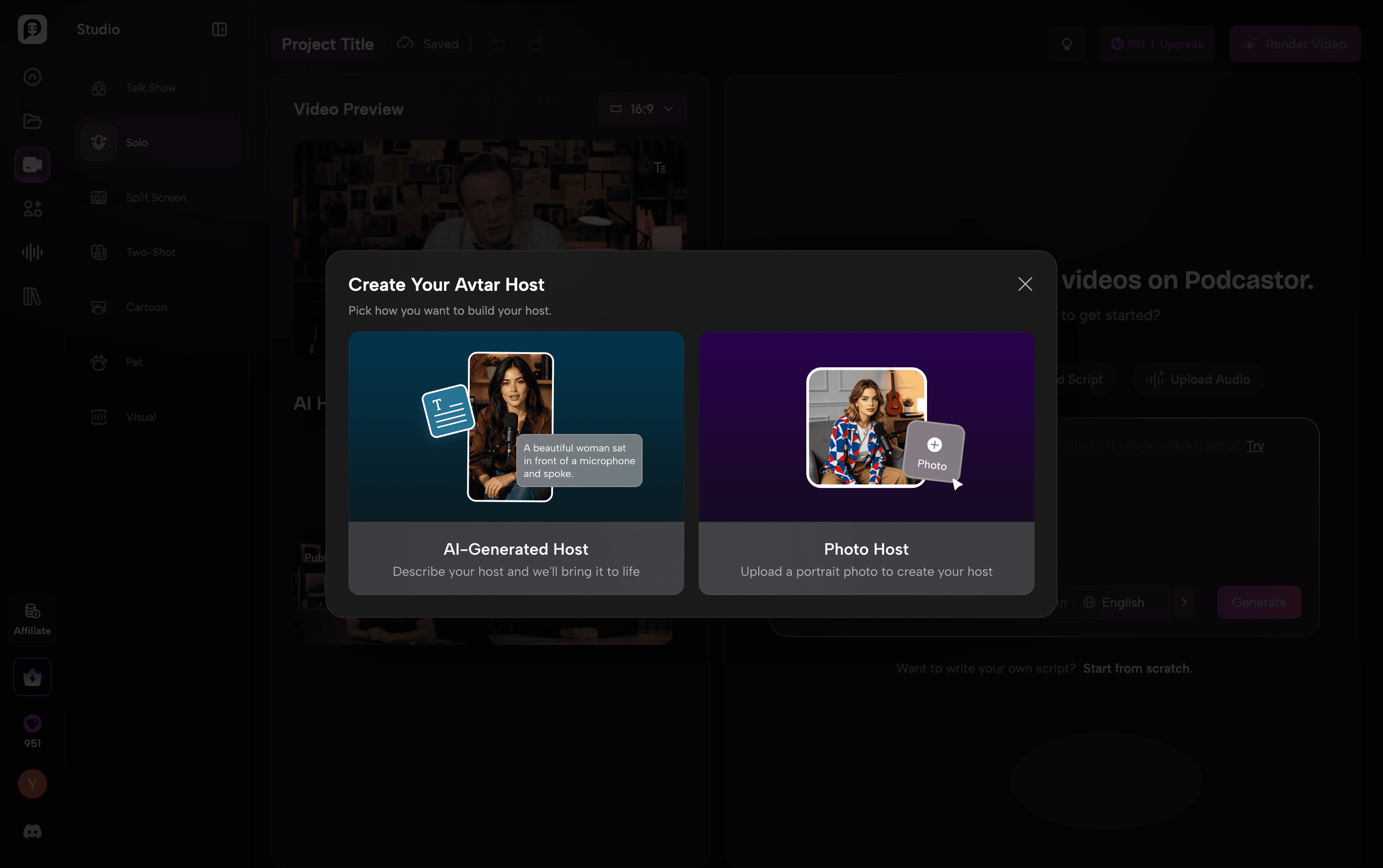
Step 1: Create Your AI Host
Create an AI host for your channel. You can upload your own photo to create a unique AI host that represents your channel, or simply describe the host you want with prompts and let PodcastorAI design one for you.
If you want an even faster setup, PodcastorAI also offers ready-to-use avatars in its public avatar library, including hosts specifically designed for true crime podcasts.
Step 2: Upload Your Content
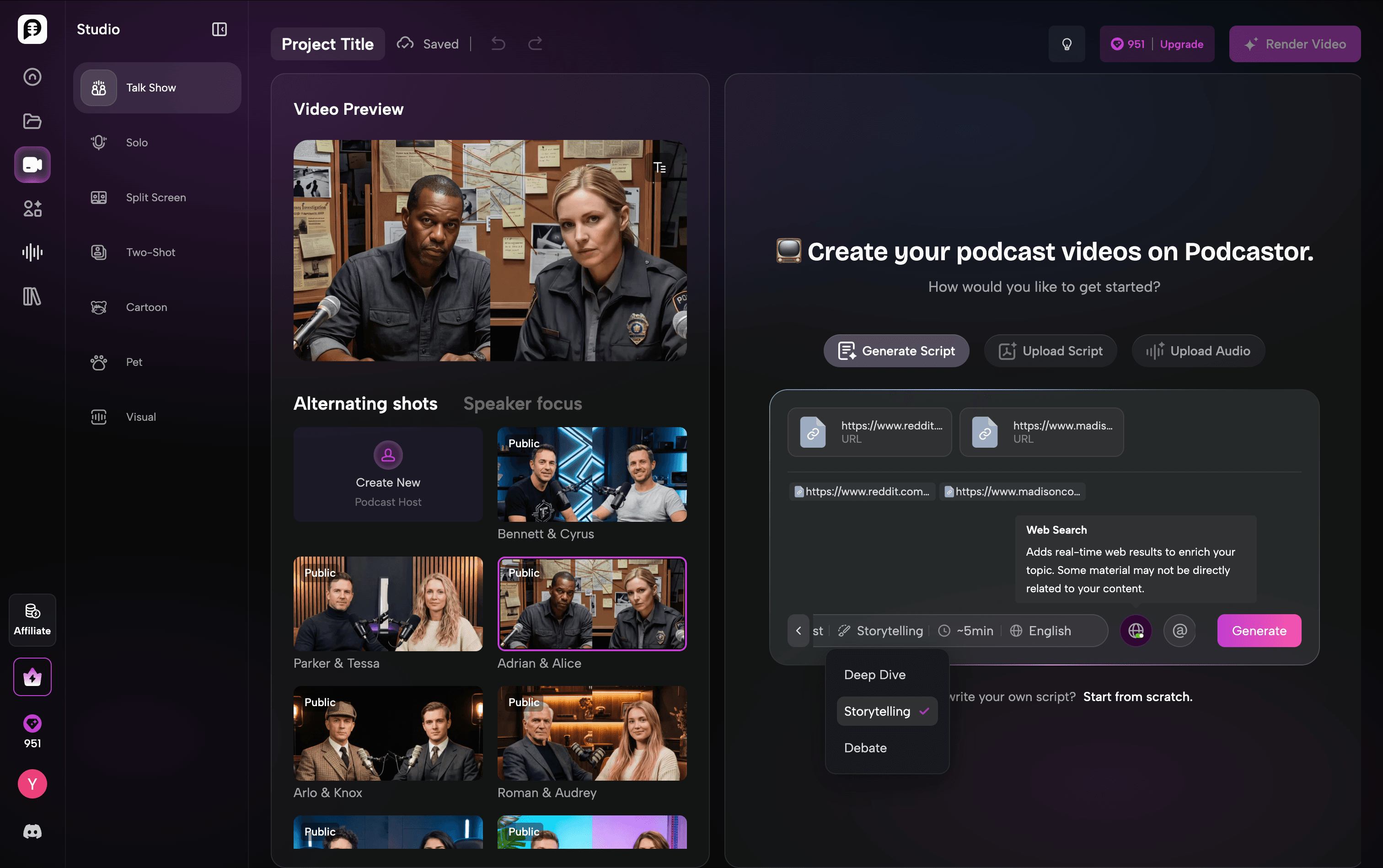
Add the source material you want to use for your episode. You can paste case URLs from Reddit, CourtListener, NamUs, the FBI Wanted database, Wikipedia, news articles, and other web pages, or upload your own PDFs, research notes, case files, audio, or existing scripts.
You can combine multiple sources in one project, and PodcastorAI will help organize scattered information into a structured true crime script. You can also enable Web Search to bring in additional context and relevant information from the web.
Then choose your preferred format, such as Storytelling, Deep Dive, or Debate, along with the episode length and language. PodcastorAI will turn your materials into a complete script that connects the case timeline, key people, evidence, and important details, so you don’t have to start from a blank page.
Step 3: Generate Your Script
Once your sources are added, PodcastorAI will organize the information and generate a complete true crime podcast script based on the URLs, PDFs, and other materials you provided.
It helps turn scattered case research into a podcast-friendly structure, covering the case background, timeline, key people, important evidence, and major developments. If you choose a two-host format, PodcastorAI can also structure the script as a natural conversation between the hosts instead of simply reading the source material aloud.
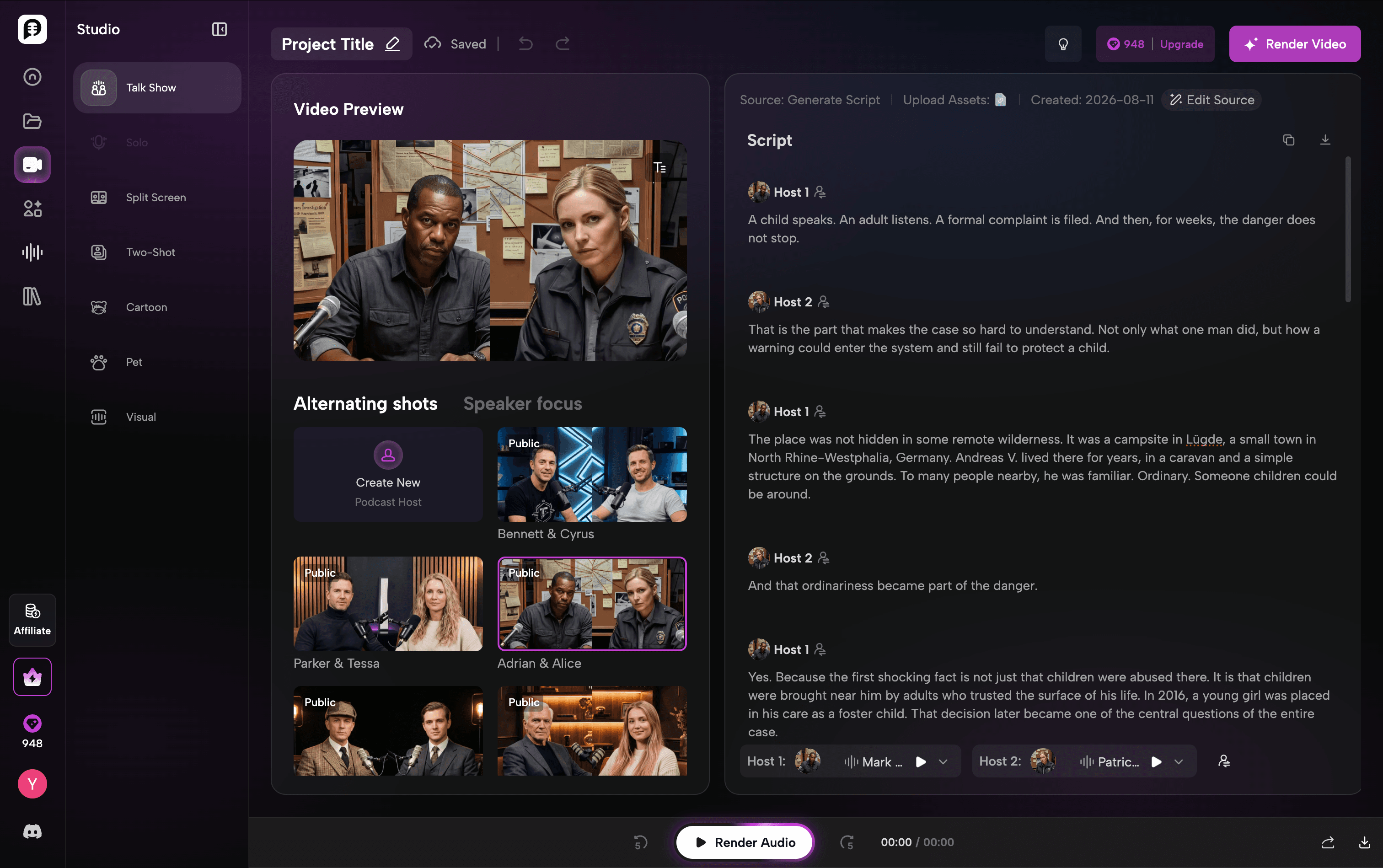
After the script is generated, you can review and edit it directly in the editor, rewrite sections, remove unnecessary details, or return to your sources to add more information. You can also choose a different voice for each host and preview how they sound.
Once the script and voices are ready, click Render Audio to turn the script into a complete podcast audio track before moving on to video production.
Step 4: Render Your Podcast
Once your script, hosts, and voices are ready, it’s time to turn everything into a finished podcast.
PodcastorAI lets you create either an audio podcast or a video podcast, depending on where you plan to publish. For a straightforward case walkthrough, you can use a solo host to guide listeners through the timeline. For cases with conflicting theories, multiple suspects, or complex evidence, a two-host discussion can make the story easier to follow through natural back-and-forth conversation.
If you’re creating a video podcast, you can pair your AI hosts with different visual layouts and switch between alternating shots or speaker-focused views to make the episode feel more dynamic. This works especially well for true crime content on YouTube, where viewers can follow the discussion while staying visually engaged.
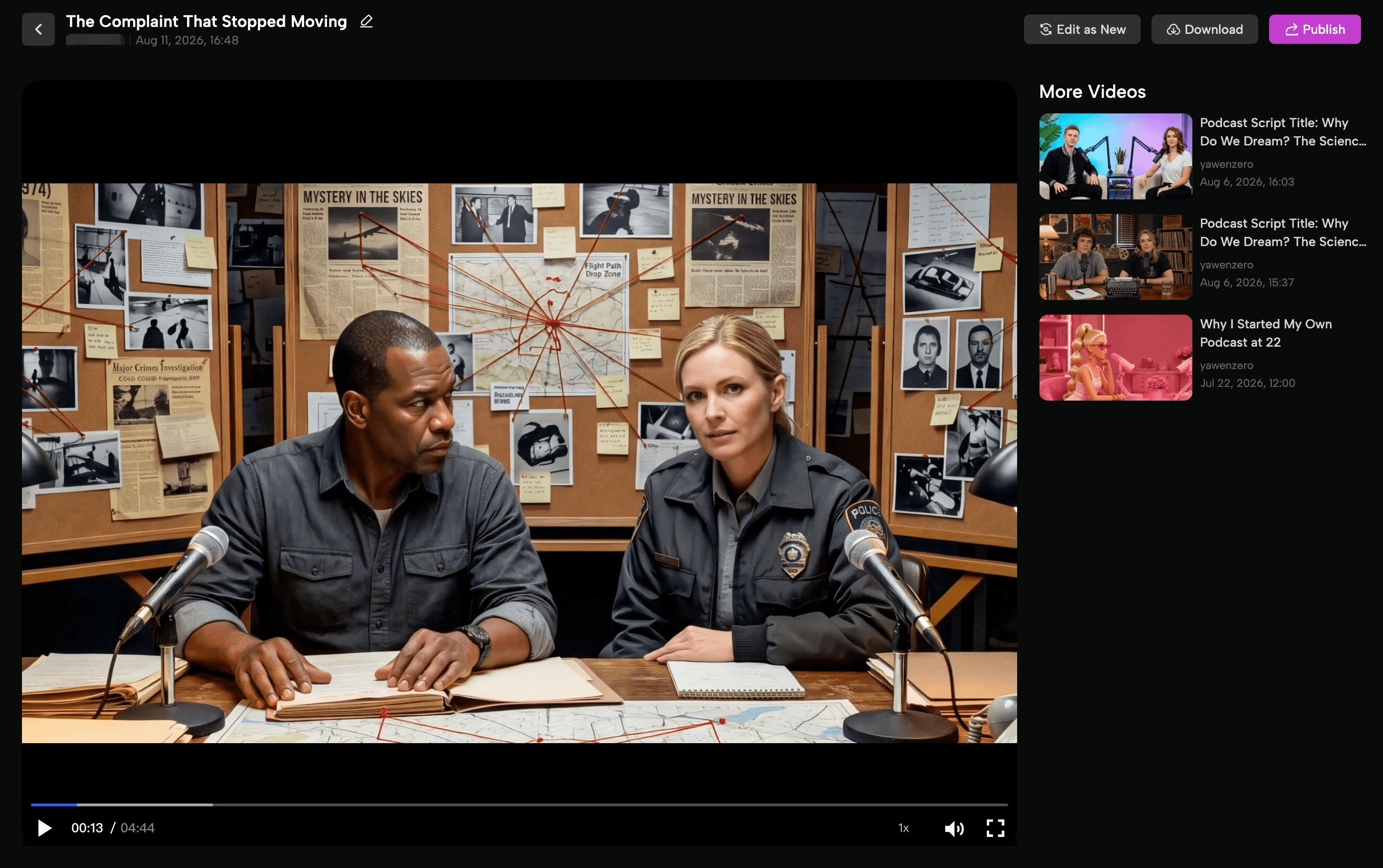
Once everything looks and sounds right, render your final episode and export it for publishing on platforms like YouTube, Spotify, Apple Podcasts, or social media.
Choose an audio or video format
Choose the format that fits the story and the time you can spend on every episode.
| Format | Best for | Strength | Trade-off |
|---|---|---|---|
| Solo narration | Chronologies and explainers | Efficient and focused | Needs strong pacing |
| Two-host discussion | Competing theories and complex evidence | Questions clarify the logic | Requires clear host roles |
| Audio-first podcast | Commuters and repeat listeners | Lowest visual workload | Evidence needs strong verbal signposting |
| Visual podcast | YouTube discovery and source cards | Keeps captions and timelines visible | More visual and rights review |
Summary
Starting a true crime podcast like the Crime Junkie podcast is not about copying a logo, catchphrase, or brand identity. It is about building a clear, case-led story that respects the difference between a verified fact, an allegation, a theory, and an unknown.
Choose a case with reliable sources, write an episode question that gives the story direction, and make the evidence easy to follow. Once your research is ready, you do not need to move it between separate writing, voice, audio, and video tools. With PodcastorAI True Crime Podcast Generator, you can bring in a case summary, URL, PDF, document, or research notes, then turn that material into an editable script, AI-narrated audio, or a video podcast with hosts, layouts, and subtitles.
That means you can spend more time finding the angle that makes your case worth hearing and less time rebuilding the same episode in different tools.
FAQ
Can I make a podcast like the Crime Junkie podcast?
Yes. With PodcastorAI’s True Crime Podcast Generator, you can quickly create a true crime podcast with a conversational format similar to the Crime Junkie podcast. PodcastorAI can help you move from case research to a structured script, AI narration, audio, and video. PodcastorAI web search feature can also help supplement your case research with additional information. Review every result before using it in the final script, and keep your show name and branding original.
Where can I find true crime stories for a podcast?
Use Reddit and local communities for audience signals, case directories for leads, local news for context, and court or agency records for verification. No single website should carry the entire episode.
How do I write a true crime podcast script?
You can use PodcastorAI to create the first draft. Enter a case summary, URL, PDF, document, or raw research notes, then generate a structured script with a hook, case context, timeline, investigation, and closing. Choose solo narration or a co-host format, edit the draft, and check every claim against your source table before recording. For a two-host script, give the second host a specific job such as clarifying evidence or marking uncertainty.
Can AI write a true crime podcast script?
Yes. PodcastorAI can turn your case research, URLs, PDFs, documents, notes, or interview material into a first-pass true crime podcast script. It can organize the narrative, create solo or co host dialogue, generate narration, and help move the approved script into audio or video.
Is PodcastorAI useful for a true crime podcast?
Absolutely. PodcastorAI brings the main production workflow into one place: case research, script generation and editing, solo or co-host formats, AI voices, audio creation, AI hosts, video layouts, and subtitles. It is useful when you want to turn one researched case into a podcast episode and a YouTube-ready video without setting up a studio or moving between several production tools.