
Podcasts make it easy to hear German. You can replay exchanges and return to phrases. But listening time alone is not enough: each podcast should match your level and give every listen a purpose.
Finding that fit is not always easy in podcast libraries. First, consider what makes an episode useful. Then see how PodcastorAI can turn your material into a custom podcast and how to study with it actively.
What Makes a German Podcast Useful for Learning?
A useful German podcast offers a manageable challenge: enough familiar language to follow the situation, plus something new to notice. Beginners may need short exchanges; advanced learners, explanations or competing viewpoints.
Treat each episode as input for a task: decide what you will identify, recall, or say. If no episode fits, PodcastorAI can create one around your goal and material.

How to Create a German Learning Podcast With PodcastorAI
Imagine an A2 learner preparing to buy a train ticket to Hamburg. With PodcastorAI, an AI podcast generator for language learning, that everyday situation can become a focused listening lesson. Follow the same example from source material to final audio.
Step 1: Set the Goal and Add the Source
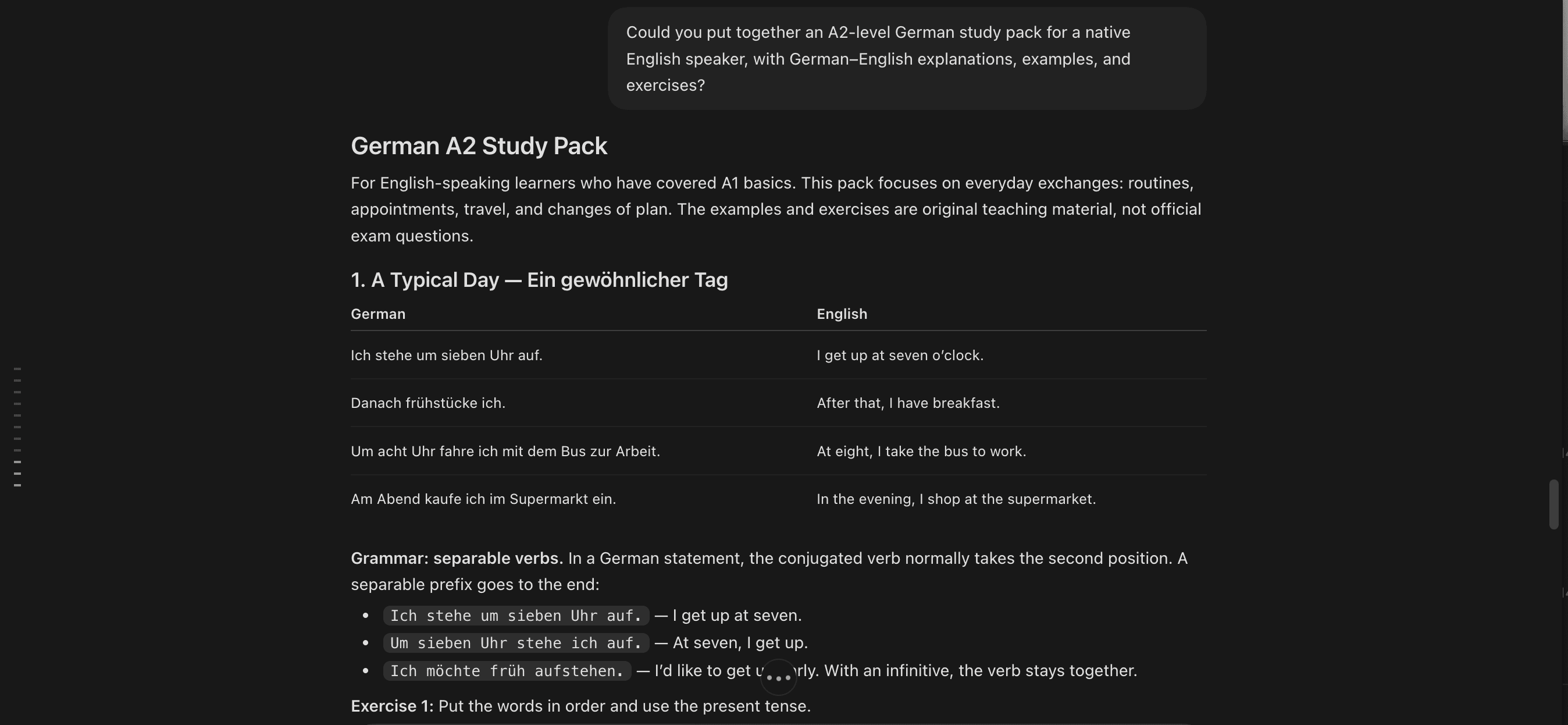
Start with one can-do goal: “After listening, I can buy a ticket to Hamburg, confirm the departure time, and ask for the platform.” List the facts the episode must include: a one-way ticket, a 10:20 departure, platform 7, and formal Sie. Clear constraints keep the dialogue focused.
Example lesson brief:
Create an A2 German listening lesson at a train-station ticket counter. Use two roles: a passenger and a clerk speaking formally with Sie. The passenger buys a one-way ticket to Hamburg, departing at 10:20 from platform 7. Include Ich hätte gern…, Wann fährt der Zug ab?, and Von welchem Gleis fährt der Zug? Keep sentences short. End with two comprehension questions and pause before the answers.
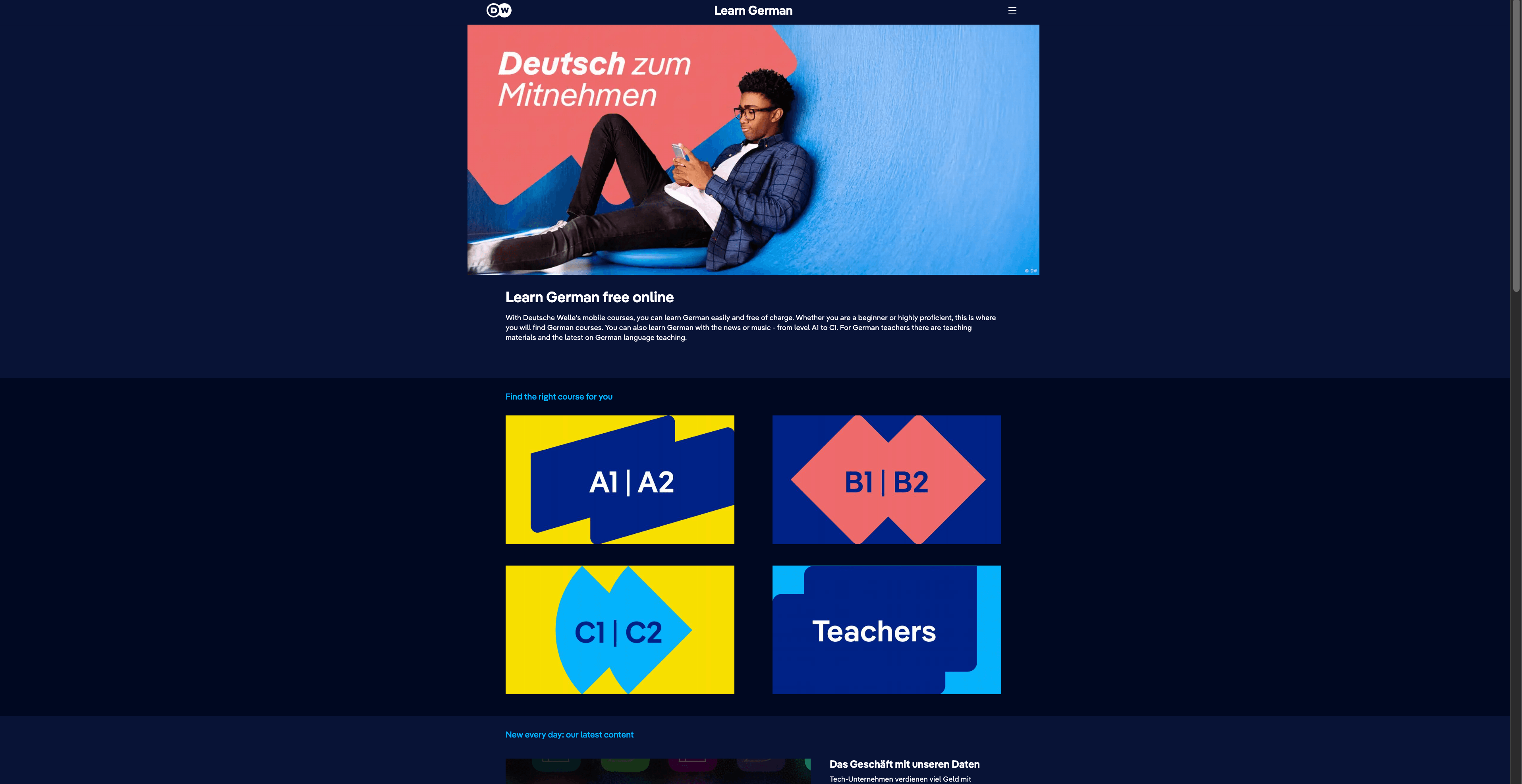
Open the PodcastorAI language-learning podcast tool and select Lesson Builder. Enter the lesson brief in the main field. You can also add a reference through Paste Link, such as the DW Learn German lesson “Der Bahnhof”. PodcastorAI also accepts documents, images, and audio files as source material.
Step 2: Configure the German Episode
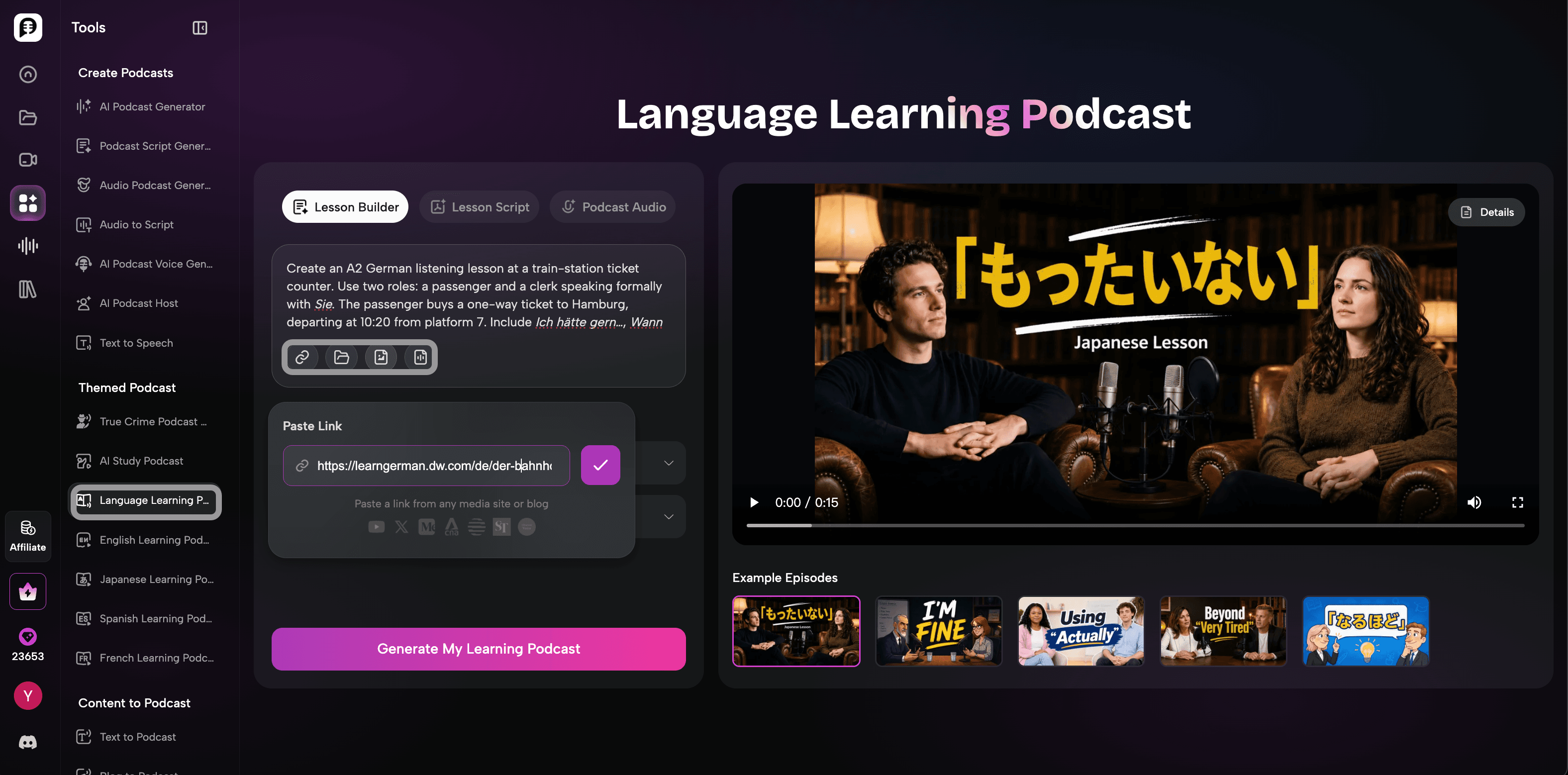
Under Customize Your Episode, select 2 hosts, Storytelling, ~5min, and German (Deutsch). Two hosts make the passenger and clerk easy to follow, while a short episode keeps one A2 situation manageable. PodcastorAI offers one or two hosts, three formats, and several duration ranges, so match the settings to the task.
Choose the format according to what the learner needs to do:
| PodcastorAI format | Best suited to | How it could use German material |
|---|---|---|
| Deep Dive | Noticing and explaining a language pattern | Contrast nach Hamburg with zum Bahnhof and explain the phrases |
| Storytelling | Predicting and following a sequence | Let a traveler find the train, buy a ticket, and reach the platform |
| Debate | Comparing claims and producing reasons | At B2+, compare rail and car travel using an approved source |
For this A2 lesson, Storytelling supplies context and a reason to keep listening. If the learner repeatedly confuses a structure, make a separate Deep Dive from the same source rather than overloading the story.
Step 3: Generate and Review the Podcast Script
Select Generate My Learning Podcast, then open the script in the studio.
Review the generated script against the source and goal. Check that the situation is understandable, both hosts have clear roles, and the comprehension question can be answered from the audio. For German, inspect articles and case, verb position, separable verbs, and consistent use of du or Sie. Remove distracting detail and flag words that need a pronunciation check.
For this example, verify Hamburg, 10:20, platform 7, a one-way ticket, and formal Sie. Keep the explanation short enough that the exchange remains the main listening input. If you want video, use the studio layout step to select an AI-host or faceless format and a suitable visual style.
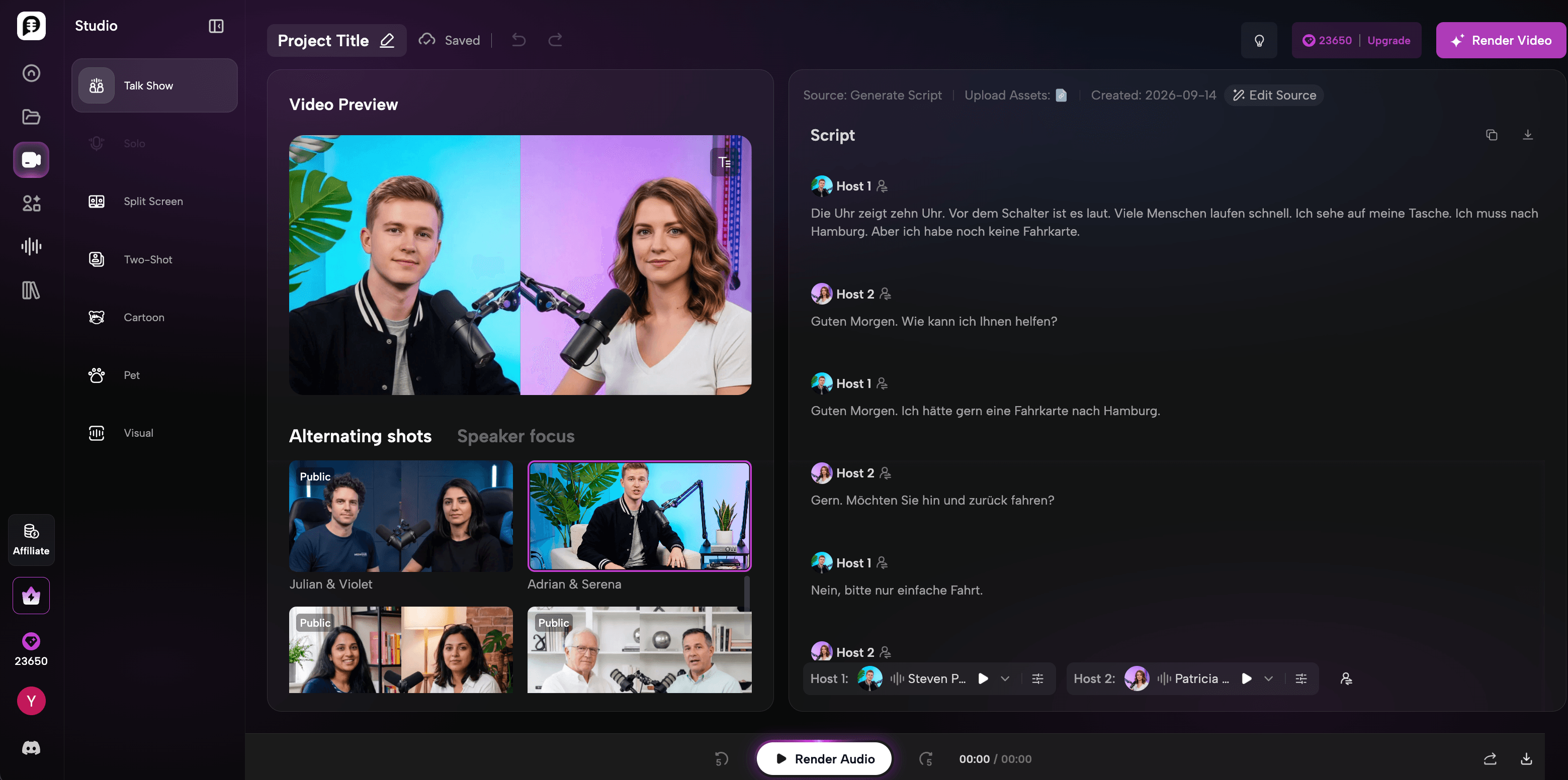
Step 4: Choose AI Voices and Create the Episode
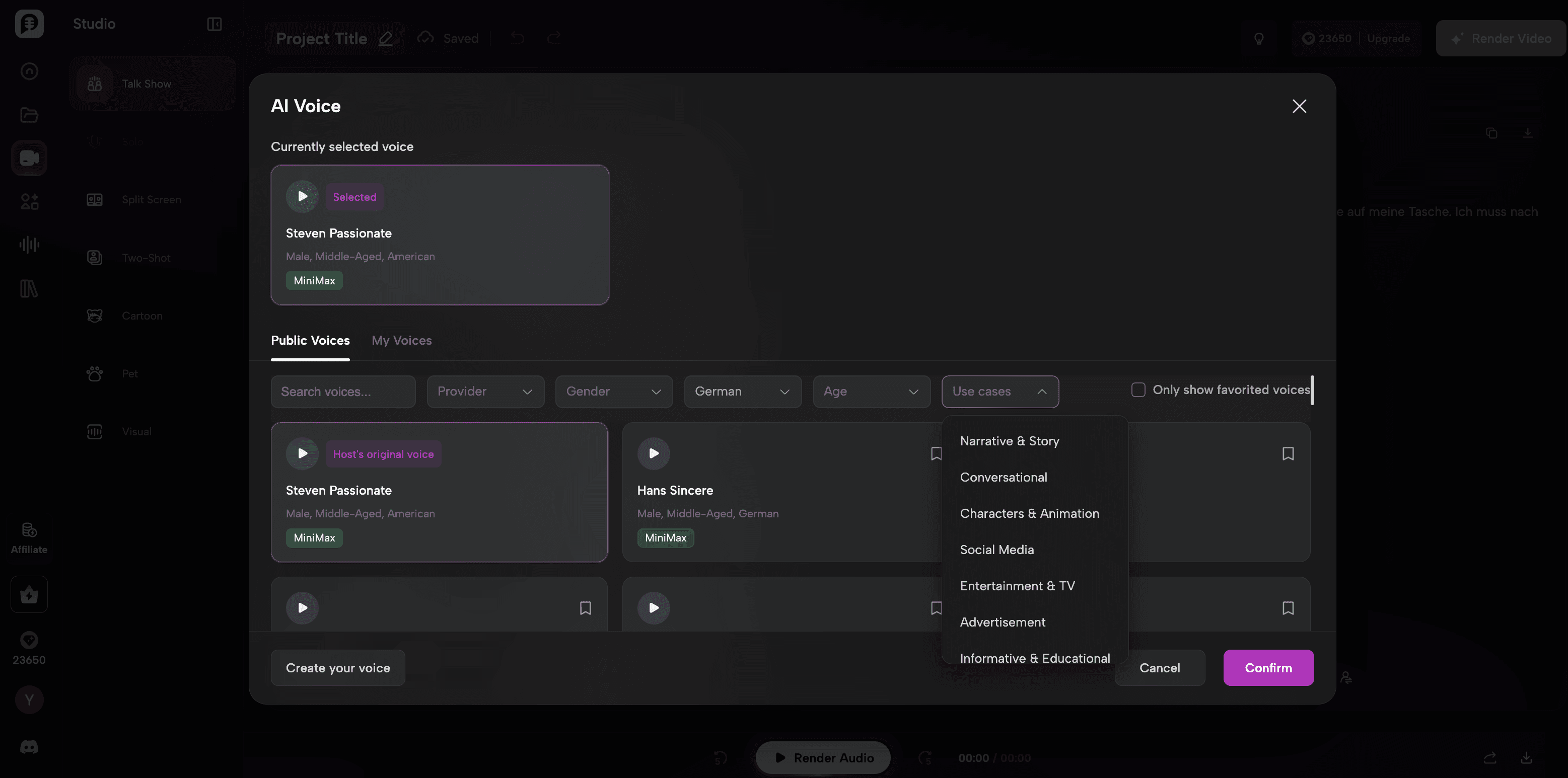
Choose two distinguishable voices for the passenger and clerk from PodcastorAI’s AI voice library. Preview both voices before generating the full episode, checking German pronunciation, speaking pace, pauses, speaker changes, and whether key details such as “10:20” and “Gleis 7” are easy to hear. You can also use a custom or cloned voice when appropriate. The voice library includes a diverse selection of high-quality voices from ElevenLabs, MiniMax, and other providers to suit different languages, formats, and listening scenarios.
Step 5: Preview, Export, and Assign the First Listen
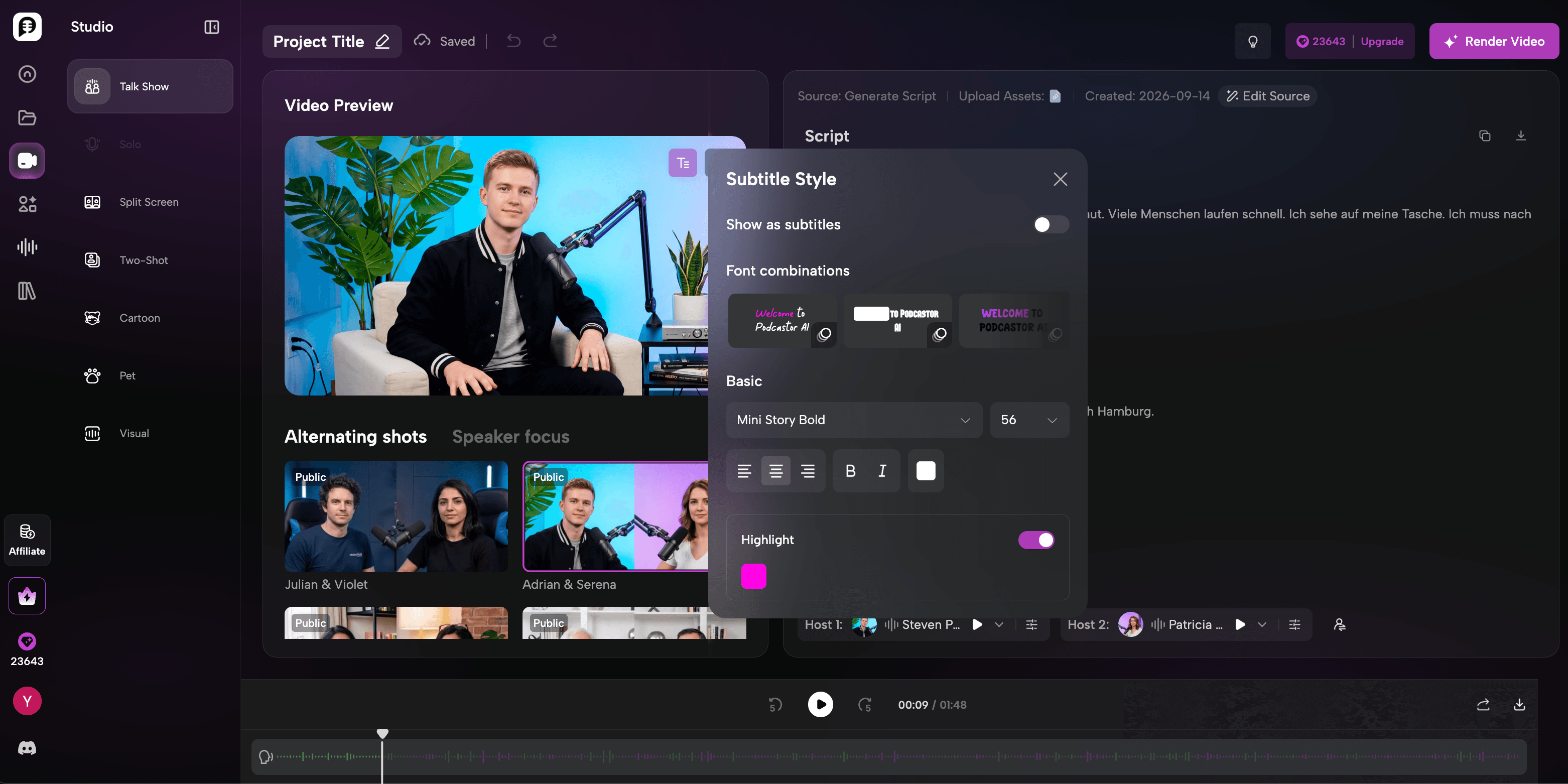
Preview the result with PodcastorAI’s subtitles, waveform, and playback controls. Fix any script or voice issue before export. Download the audio for screen-free practice or render an AI-host or faceless video. Use audio for the first no-text listen and captions only to diagnose missed phrases. Ask: “What time does the train leave, and from which platform?” Then have the learner request the platform in German.
Match German Podcast Practice to Your Level
A German podcast may be too fast or unrelated to your lesson. Familiar situations leave more attention for case endings, separable verbs, and du versus Sie.
Set difficulty by what the learner can do, not episode length. The Council of Europe’s CEFR descriptors describe communicative “can-do” abilities. These examples apply that principle but are not official CEFR wording.
| Level | Listening target | Suitable episode design and response task |
|---|---|---|
| A1 | Familiar words in predictable speech | Short episode; repeat the requested item |
| A2 | Essential everyday details | Two-host story; note time, price, or location |
| B1 | Main points on familiar topics | Connected story; retell three events |
| B2 | Explanations and contrasting viewpoints | Deep Dive or Debate; summarize each position |
| C1–C2 | Nuance and register | Longer Debate; infer attitude and respond |
Choose German Podcast Material You Can Learn From
Match material to the target skill. Notes can review taught language, an original image can prompt description, and a permitted article or approved audio can support discussion. Define one feature to notice and one question to answer.
| Lesson-design element | A2 train-station example | How to shape the episode |
|---|---|---|
| Situation | Buy a ticket to Hamburg | Assign passenger and clerk roles |
| Target chunks | Ich hätte gern…; Wann fährt der Zug ab? | Use each expression in context |
| Detail to notice | nach Hamburg but zum Bahnhof | Explain the contrast briefly |
| Comprehension check | Which platform and time? | Include both details in the dialogue |
| Speaking transfer | Change the destination | Pause before a model response |
For topic ideas, consult the Goethe-Institut’s practice resources, DW Learn German, and the Goethe-Institut podcast collection.
Turn Each German Podcast Into Active Practice
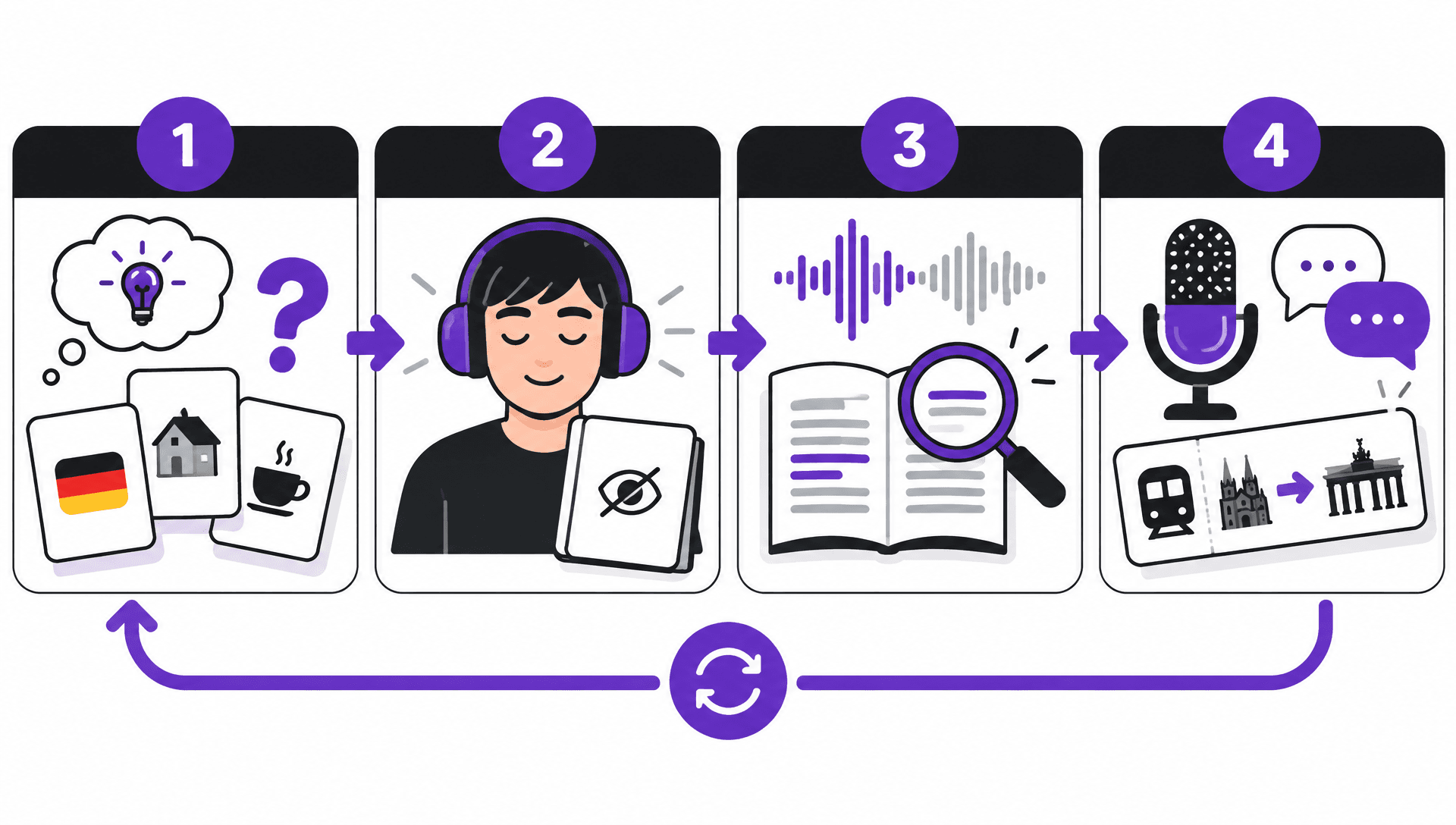
Use a four-pass loop: predict, listen, diagnose, and transfer. First predict two phrases; then listen with the script closed and answer the main comprehension question.
Next, open the script or captions to diagnose an unknown word, connected speech, a case ending, or a separable verb. Mark only difficult lines and replay them.
Close the text and reconstruct one line from memory. A retrieval-practice study in Science supports active recall over repeated exposure alone; it does not mean a podcast guarantees progress.
Finally, transfer the language: replace Hamburg, change the time, or answer as the clerk. Reuse the source in PodcastorAI for another format or level.
Build a Repeatable German Podcast Routine
Choose a German podcast you can understand with effort and reuse with purpose. Listen for meaning, check what you missed, and respond in German.
When ready-made German content does not fit your level, topic, or learning goal, PodcastorAI lets you create a custom German learning podcast from your own material. Set German as the language, choose the format, hosts, voices, and length, then turn the episode into repeatable listening practice.