TLDR
A faceless true crime YouTube channel can be built in 2026 in 8 steps: 1) research a case, 2) turn it into a script, 3) pick a format, 4) generate or clone narration, 5) produce audio, 6) convert to video, 7) add visuals, 8) publish. Most successful new channels reach YouTube monetization in 6–12 months, and an estimated 60–70% of new launches are faceless. Tools like PodcastorAI consolidate steps 2 through 7 into one workflow — but the playbook below works whether you use one tool or stitch together six.
Intro
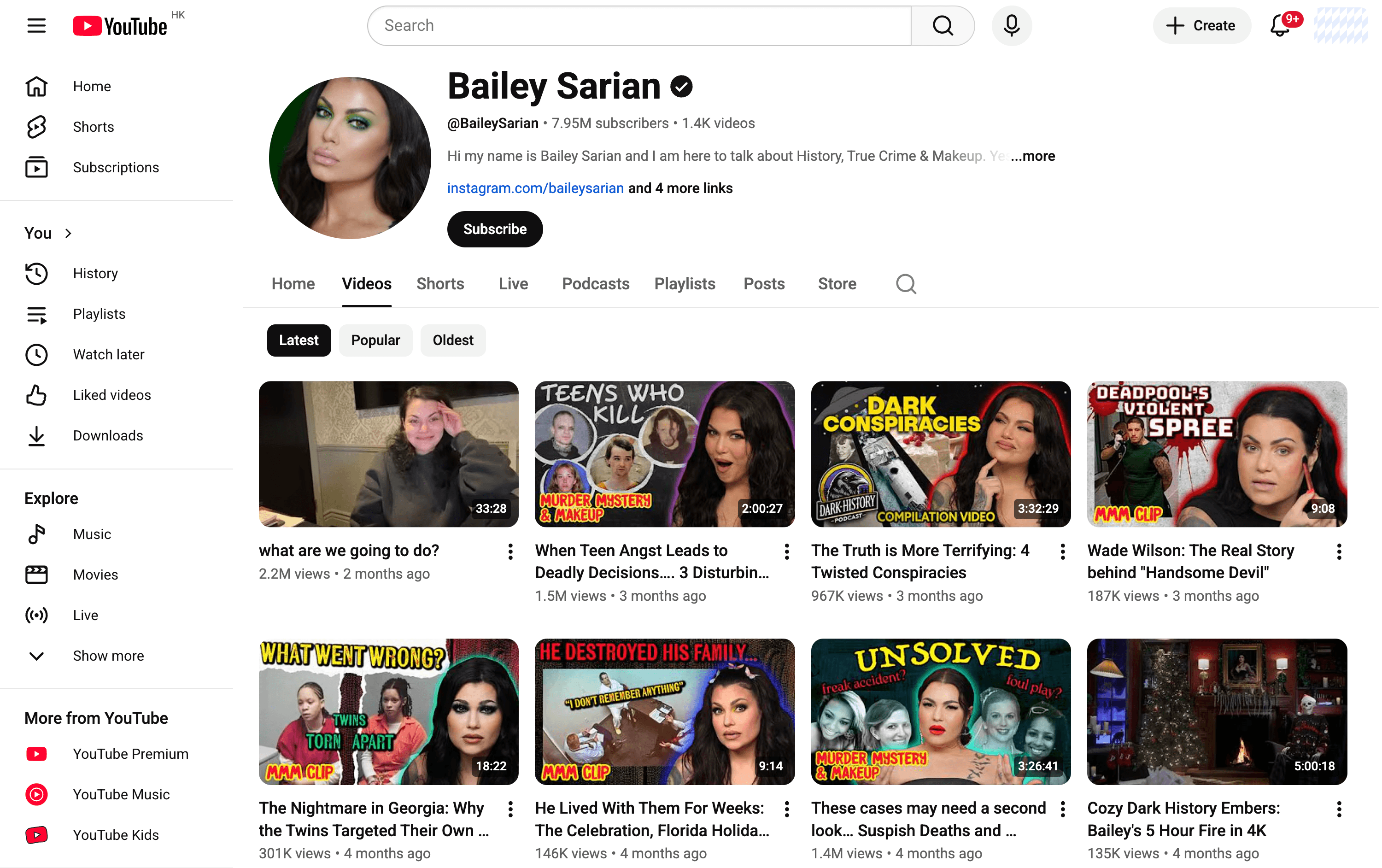
Have you ever watched crime channel creators like Bailey Sarian, MrBallen, or Kendall Rae and wondered:
“Could I start a true crime channel like this too?”
True crime is one of YouTube’s three highest-RPM niches as of 2026, earning creators $4–$12 per 1,000 views — multiples higher than gaming or general entertainment.
According to Edison Research’s True Crime Consumer Report, true crime is the third most listened-to genre in U.S. podcasting, and the number of listeners has roughly tripled in the past five years. The YouTube version of the genre has tracked the same growth curve.
True crime is also moving into larger creator-led formats. Netflix has worked with YouTube-native creator Bailey Sarian on its Case Closed with Bailey Sarian series, where she breaks down mysteries from Netflix shows and films.
For new creators, the signal is clear: true crime is no longer just a “sit down and talk to camera” niche. It is becoming a cross-platform storytelling format across YouTube, podcasts, video podcasts, and streaming platforms.
Most True Crime Channel Advice Is Outdated
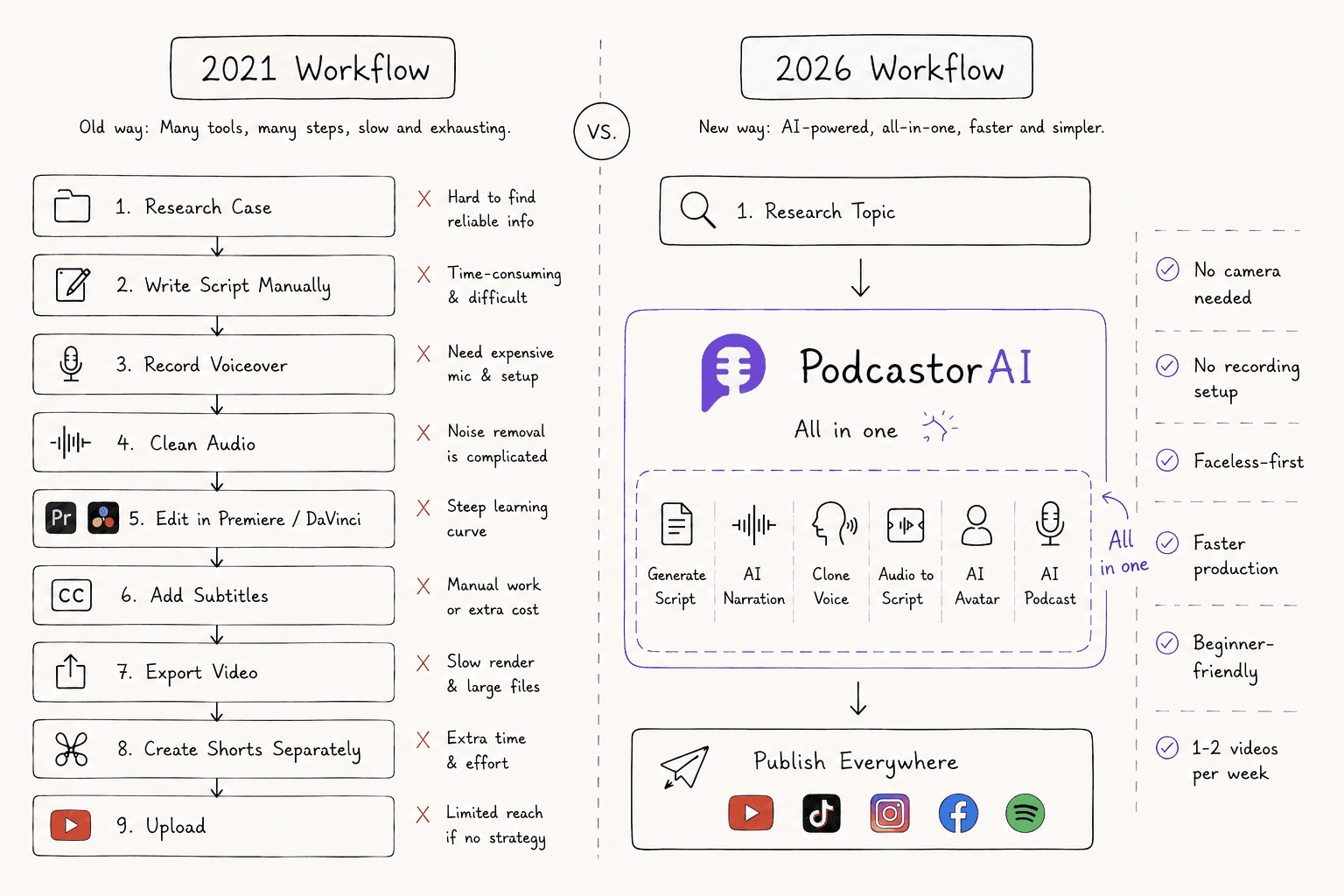
Most guides teaching you how to start a true crime YouTube channel are still stuck in 2021 and still telling you to buy a Blue Yeti and learn DaVinci Resolve.
The 2026 workflow looks completely different. Many newer creators now build true crime channels using AI narration, documentary style scripting, stock footage, subtitles, and streamlined production tools.Even without appearing on camera. Because true crime is heavily narration-driven, viewers usually care far more about storytelling quality than whether you’re on screen.
If you don’t want to show your face, don’t own a professional mic, or simply don’t want to use your own voice, this guide will walk you through how faceless true crime channels are actually built in 2026.
How to Actually Start a Faceless True Crime Channel
Step 1: Start With the Story Research
The easiest mistake when starting a true crime channel is focusing on editing, AI tools, or production before you even have a compelling case. In reality, most successful faceless true crime channels start with research first.
Before worrying about narration, visuals, subtitles, or uploads, you need:
-
a case people genuinely want to hear about,
-
a clear storytelling angle,
-
and a structure that keeps viewers watching until the end.
If you have absolutely no idea where to find stories, some of the best places to find story ideas include:
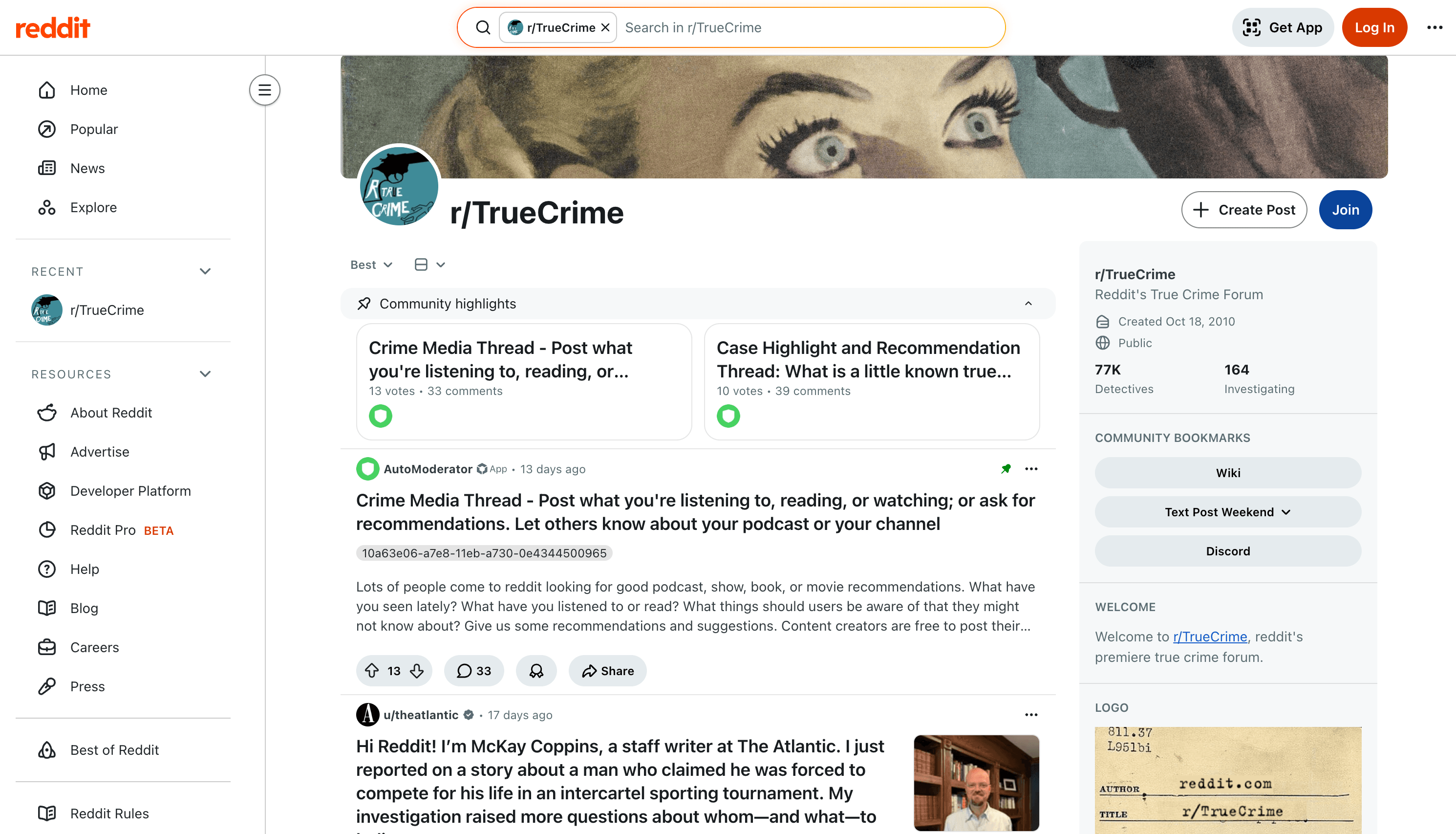
Communities like r/TrueCrime and r/UnresolvedMysteries are essentially free audience research tools.
The most valuable part usually isn’t the case itself — it’s the comments.
Pay attention to:
-
which details people obsess over
-
which theories spark arguments
-
and which cases generate hundreds of replies
That’s often a strong signal the story already has retention potential
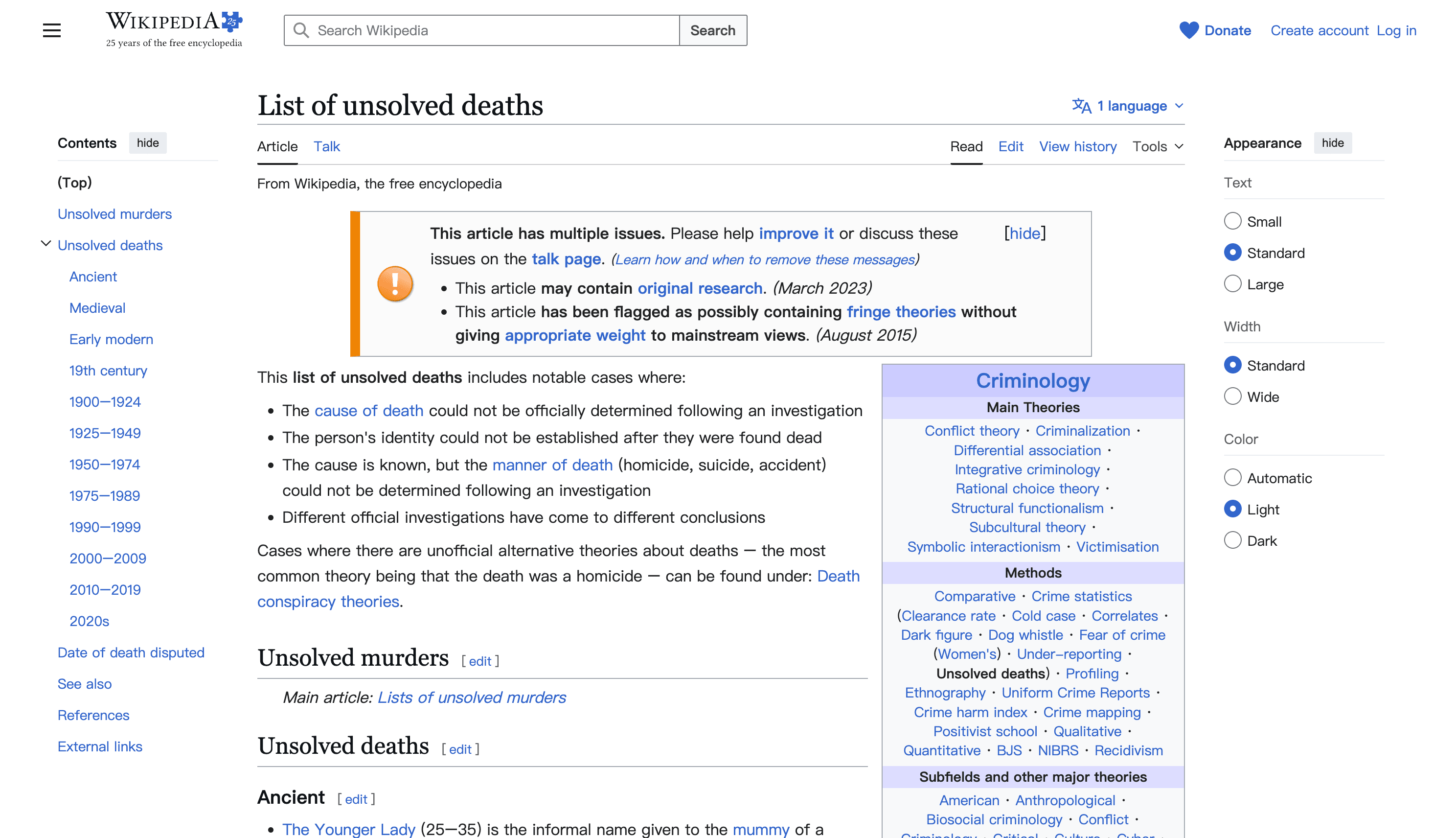
Wikipedia and News Archives
If you want larger cases with lots of available information, public archives are one of the easiest starting points.
Common starting points include:
-
Wikipedia – List of people who disappeared mysteriously
-
FBI Most Wanted
By this point, you’re not really “looking for crime stories” anymore.
You’re looking for suspense, emotional tension, unanswered questions, and stories people can’t stop discussing.
Local News Stations
This is one of the easiest ways to find stories nobody else covered properly.
Search terms like:
-
local news homicide
-
cold case county
-
missing person local station
You can uncover surprisingly strong stories.
Step 2: Turn Your Research Into a True Crime Script
Once you have a case, the next step is turning your research into a script people actually want to watch.
This is where many beginners get stuck. They collect Reddit threads, Wikipedia pages, news articles, timelines, and case notes, but they don’t know how to turn that material into a clear story.
For a faceless true crime channel, the script matters even more because narration carries most of the video. If the story feels flat or confusing, better visuals will not fix it.
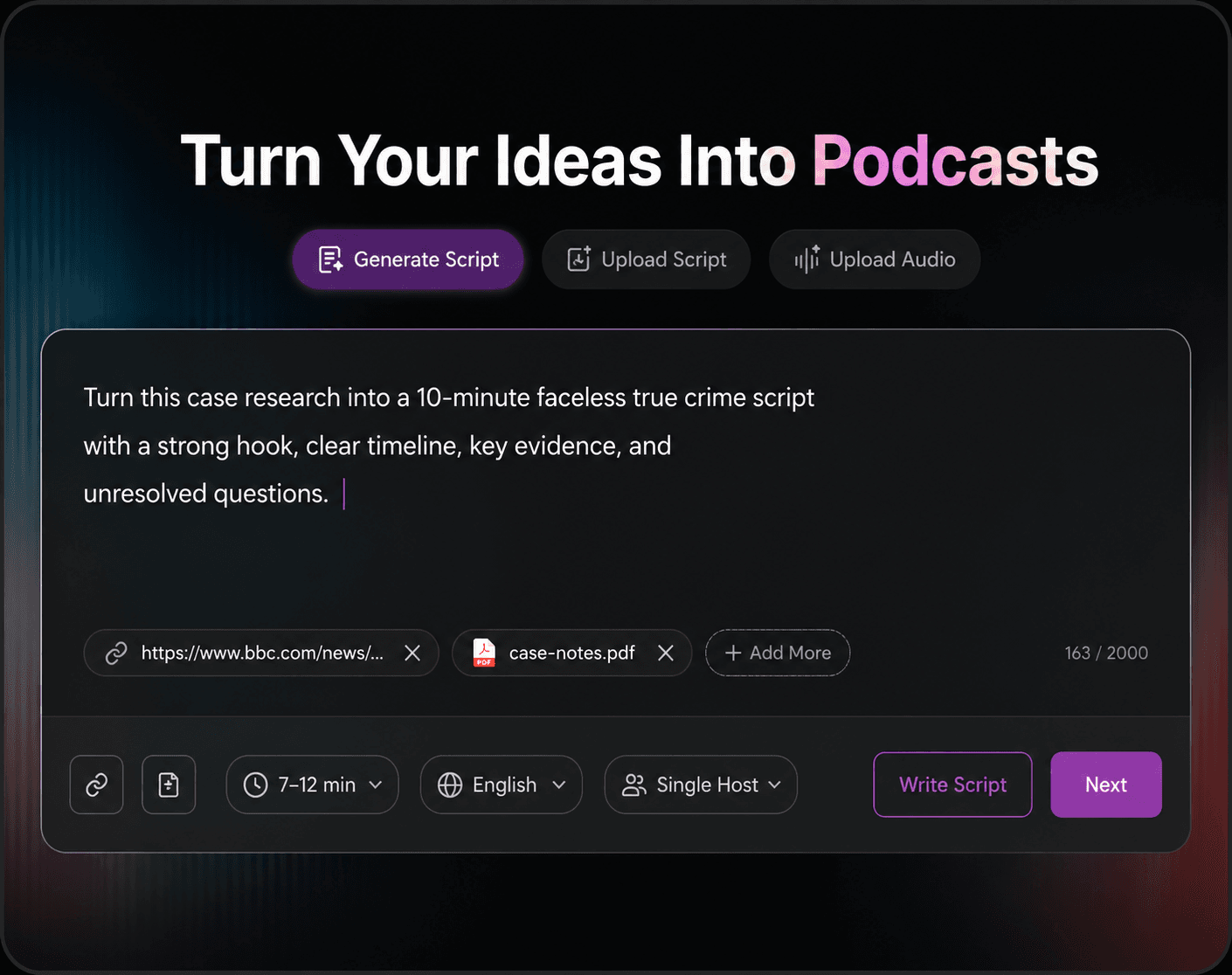
In the old workflow, creators had to write everything manually from scratch. In PodcastorAI you can start with a topic prompt, URL, PDF, or your own notes to generate a first draft before editing it for accuracy, pacing, and tone.
Step 3: Choose Your Podcast Format
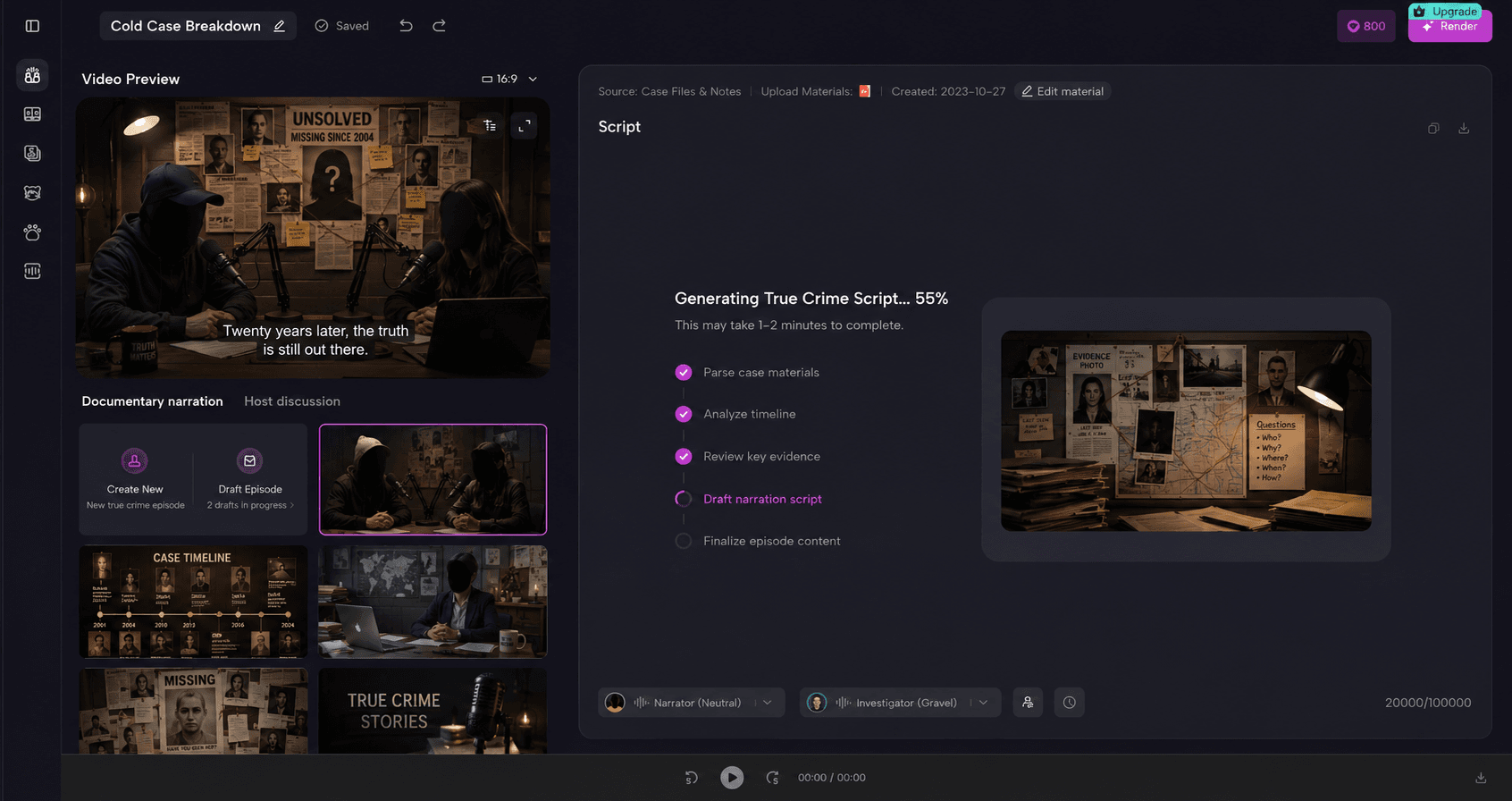
A faceless true crime channel can take many forms. You might use solo documentary narration, a two-host podcast conversation, a visual podcast with images and subtitles, or an AI host that presents the story on screen.
You can see the format comparison table later in this guide to choose what fits your time budget and target audience.
Step 4: Generate or Clone the Voice
In true crime, the voice is part of the storytelling. The wrong voice can make a serious case feel too casual, too dramatic, or too artificial.
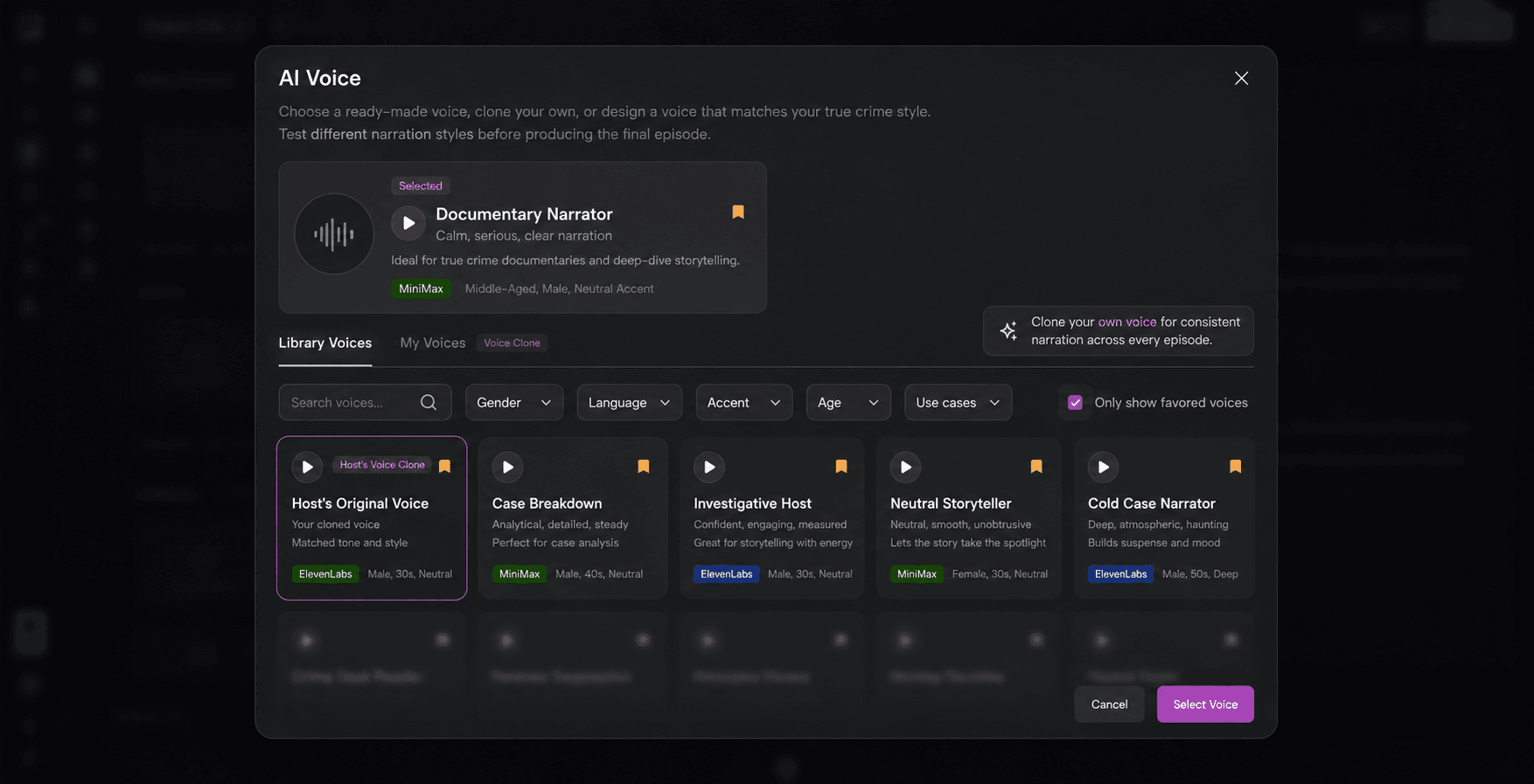
If you don’t want to record your own voice, AI narration can help you create a consistent sound for your channel. You can use a ready-made voice, clone your own voice, or design a voice that better matches your true crime style.
PodcastorAI supports voice generation through providers such as MiniMax and ElevenLabs, along with voice clone and voice design options, so creators can test different narration styles before producing the final episode.
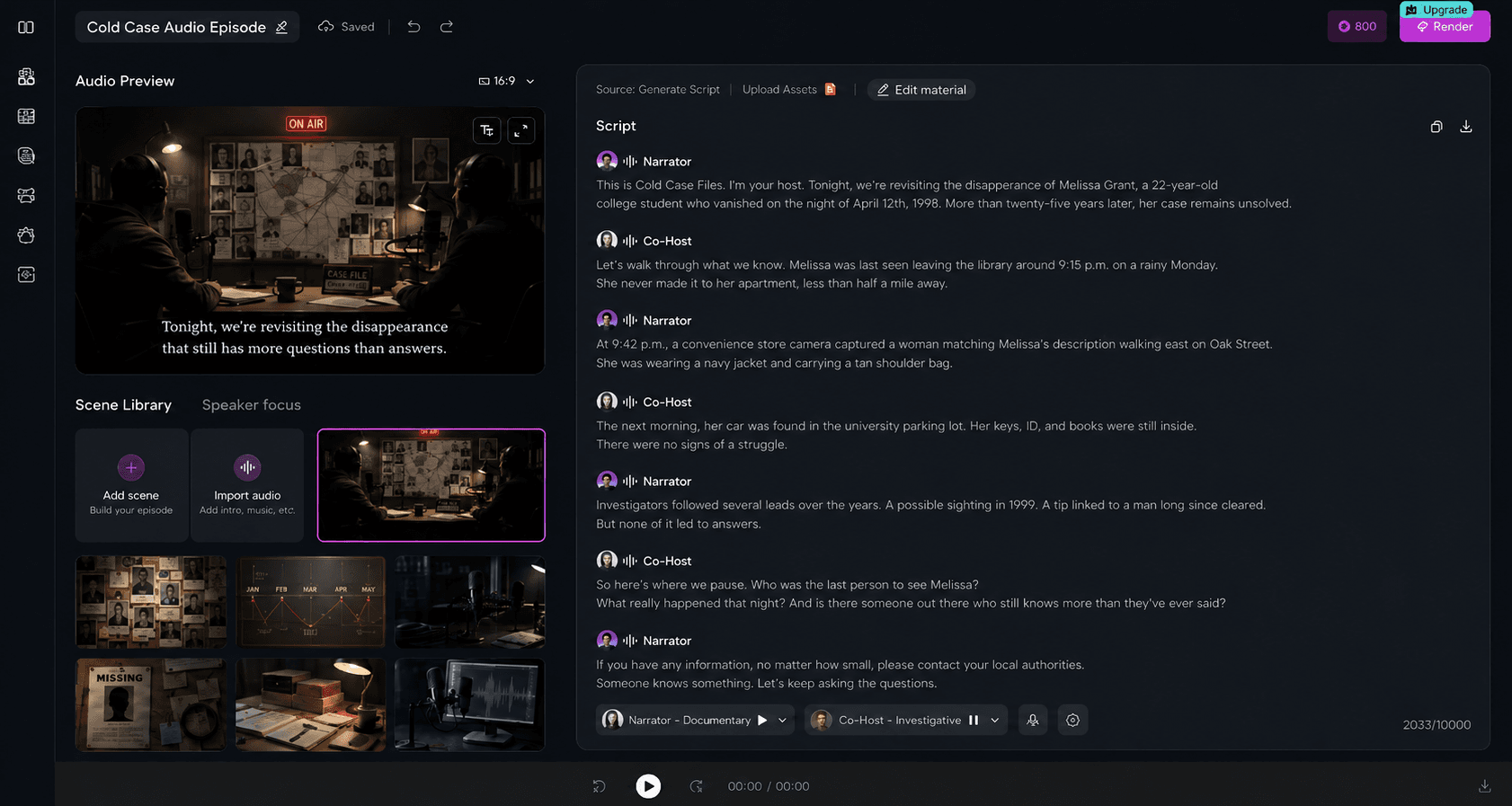
Step 5: Turn the Script Into Audio
Once your script and voice are ready, turn the script into a full audio episode.
This step matters because true crime is not only about what you say, but how the story is paced. A good narration gives viewers time to understand the timeline, absorb key evidence, and feel the weight of unresolved questions.
With PodcastorAI, you can generate audio directly from the script, preview the result, replace voices, add pauses, and create either single-host or two-host podcast audio before moving into video production.
Step 6: Turn Audio Into Video
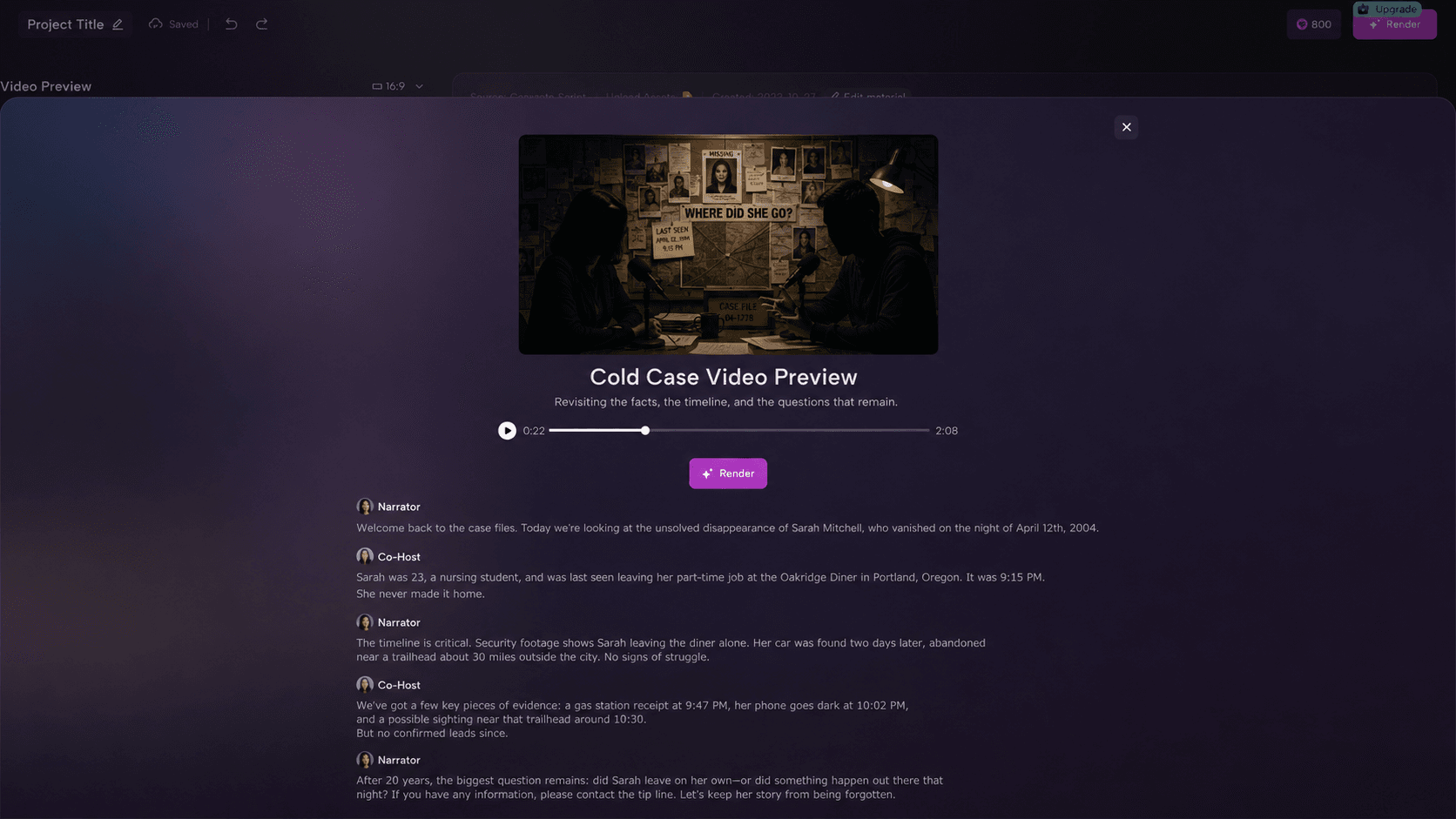
Once your audio episode is ready, the next step is turning it into a video people can actually watch on YouTube.
For true crime, this does not always mean putting your own face on camera. Many faceless channels use a documentary-style visual format with case photos, subtitles, timelines, maps, news screenshots, dark backgrounds, and slow-moving ambient visuals.
After creating the script and audio, you can use PodcastorAI to turn the episode into different video podcast styles without filming yourself or moving everything into a separate editing setup.
Step 7: Add Final Edits and Visual Details
Many true crime creators also add extra visual elements during the editing process, such as:
-
case photos
-
subtitles
-
news screenshots
-
timeline graphics
-
ambient background visuals
depending on the style of content they want to create. For some channels, simple narration with minimal visuals is enough. Others may prefer a more heavily edited documentary-style format.
Step 8: Publish and Iterate
If your episode needs more documentary details, such as real case photos, news screenshots, timeline graphics, maps, or extra B-roll, you can add those final touches before publishing.
But not every faceless true crime video needs heavy editing. If your script, narration, subtitles, and visual format already feel clear enough, you can keep the workflow simple and publish directly.
With PodcastorAI, creators can manage their script, audio, and video projects in one place, then share or publish the finished episode to platforms like YouTube without rebuilding the workflow in another tool.
When PodcastorAI Makes Sense for True Crime Creators
PodcastorAI may be a good fit if you:
-
don’t want to appear on camera
-
don’t have a script
-
don’t have professional recording equipment
-
don’t want to use your own voice
For many creators, the hardest part is not just starting a true crime channel. It is moving from idea to script, from script to narration, and from narration to a finished video without switching between too many tools.
PodcastorAI helps simplify that workflow by bringing script generation, AI narration, voice cloning, audio creation, and faceless video formats into one place.
Before you commit to a regular upload schedule
Before you commit to a regular upload schedule — or scale beyond a pilot episode — get the strategic foundation right. Two decisions and one philosophy will determine whether your channel compounds or fizzles: which sub-niche you’ll own, which faceless format you’ll publish in, and whether you treat tools as the goal or as accelerants for the real work.
Which True Crime Sub-Niche Should You Choose?
Decide which corner of true crime you’ll own. The biggest mistake new creators make is “I’ll cover any case that interests me” — that’s a personal interest playlist, not a channel. YouTube’s algorithm rewards thematic identity.
Pick one of these four sub-niches
| Sub-niche | Audience size | Research difficulty | Monetization potential | Best for |
|---|---|---|---|---|
| Cold Case & Unsolved Mystery Stories | Largest | Medium | High | Strong storytellers |
| Cult, Conspiracy & Hidden History Stories | Large | High | Very high | Long-form binge content |
| Forensic & Investigation Stories | Medium | Low | High | Detached, clinical narration |
| International / Lesser-Known Cases Stories | Growing fast | High research | Medium-High | Multilingual creators |
-
Cold Cases & Unsolved Mystery Stories: The most viewer friendly sub-niche because every story has a built-in cliffhanger. Channels like Kendall Rae dominate here.
-
Cult, Conspiracy & Hidden History Stories: Higher production complexity but stronger watch time. Audiences who like cults will binge an entire channel.
-
Forensic & Investigative Stories: Closer to Forensic Files in tone — detached and clinical. Perfect for AI narration because the voice is supposed to feel detached.
-
International / Lesser-Known Cases Stories: The fastest growing corner. English speaking audiences are saturated on US cases but hungry for stories from Brazil, Japan, Eastern Europe, etc.
How to choose in 60 seconds:
-
you can find at least 50 case ideas without running out
-
you would still watch a 20 minutes video about it after a long day
-
at least one channel under 50K subscribers is currently breaking out
What Are the 4 Faceless True Crime Formats That Work?
You don’t need to show your face to build a true crime channel. In 2026, most faceless formats come down to how you want the story to feel on screen.
| Format | Best for | Why it works |
|---|---|---|
| Visual Case Podcast | Cold cases, timelines | Simple, case-focused, faceless |
| Realistic AI Narrator | Serious commentary | Personal without showing your face |
| Two-Host Case Discussion | Theory-heavy cases | Makes complex stories easier to follow |
| Cartoon or Pet Storyteller | Lighter mystery formats | More memorable channel identity |
For beginners, the easiest format to start with is usually Podcast: it is simple, faceless, and works well for true crime stories that rely on narration, timelines, and case details.
The Real Focus Is Still Storytelling
Tools can speed up production, but they don’t replace storytelling. What actually makes a true crime channel work is not the software you use, but the way you choose and structure your stories.
PodcastorAI is simply designed to remove the production friction after research, so creators can focus more on storytelling and less on technical work.
What Can You Do Right Now to Start a True Crime YouTube Channel?
| Check | Day | Goal |
|---|---|---|
| ☐ | Day 1 | Choose your sub-niche and true crime case |
| ☐ | Day 2 | Use PodcastorAI to turn your research into a script, audio, and faceless video in one workflow |
By the end of Day 2, your goal is to move from case research to a finished test episode.
Common Legal & Monetization Questions
Can true crime channels be monetized on YouTube?
Yes, true crime channels can be monetized, but the content still needs to follow YouTube’s monetization and advertiser-friendly guidelines. Avoid making the video overly graphic, sensational, or shocking just to get clicks. YouTube also looks at the video itself, title, thumbnail, description, and tags when judging ad suitability.
Can I use real case photos or news screenshots?
Sometimes, but be careful. Publicly available does not always mean free to reuse. If you use copyrighted images, news clips, or third-party footage, you may need permission or a valid copyright exception such as fair use. YouTube says it cannot decide fair use for you, and only courts can make that final determination.
Safer paths for true crime creators:
-
Creative Commons sources (Wikimedia Commons, Library of Congress)
-
Public domain materials (pre-1929 in the US)
-
Licensed stock (Storyblocks, Artgrid, Getty editorial)
Reuters and AP footage will get you a copyright strike.
What should I avoid?
Avoid graphic thumbnails, exploitative titles, unverified accusations, copied news footage without permission, and content that glorifies violence or criminal behavior. Treat victims and families respectfully. A good true crime channel should feel researched and responsible, not like shock content.
How much does it cost to start a true crime channel in 2026?
It can be very low-cost. You don’t need a camera, studio, professional mic, or complex editing software to start a faceless true crime channel.PodcastorAI offers a Free plan ($0/month), Audio Creator ($9.99/month), Video Starter ($26/month), and Creator Pro ($49.99/month), so you can start small and upgrade only when you need more credits, longer videos, or more advanced production features.
Can I use AI voices commercially on a true crime channel?
Yes, if your AI voice provider’s license permits commercial use. Most major providers (ElevenLabs, MiniMax, etc.) include commercial rights in paid tiers.